Professional Stain & Odor Removal in the Denver Metro — Enzyme Treatment, Pet Urine & Carpet Stain Removal
The odor keeps coming back. The stain survived two cleaning attempts. The spray from the store worked for a week then stopped. This is not a product failure — it is a chemistry problem. Pet odors, urine stains, and set-in carpet stains are molecular events that require matched chemistry to resolve — not fragrance to cover. Colorado Choice Carpet Cleaning uses enzyme-based stain and odor removal protocols matched to contaminant type, stain chemistry, and surface. We identify what you are dealing with before we treat it.
✅ IICRC Certified
🔬 Enzyme-Based Treatment
🐾 Pet & Child Safe
🔦 UV Light Inspection
📍 Denver Metro & Surrounding Cities
Fully certified for carpet, tile & upholstery

Trusted, vetted, and held to the highest standards.

Demonstrating our commitment to trusted local service

Complete satisfaction or we come back free
5-Star Rated on Google
Why Store-Bought Stain and Odor Removers Keep Failing
Consumer stain and odor remover products fall into three categories. Understanding which category a product belongs to explains exactly why it failed.
Masking Agents
Masking agents introduce a stronger fragrance molecule to override the odor at the sensory level. The uric acid crystals, bacteria colony, or protein compound causing the smell remain completely intact. When the fragrance dissipates the odor returns — often stronger because heat and humidity have continued activating the contamination source. Every masking agent application to a pet urine area chemically alters the uric acid compound and makes subsequent enzyme treatment progressively less effective.
Pairing Agents
Pairing agents work at the ionic level — a malodor molecule bonds with a neutralizing molecule to produce an odorless compound. More sophisticated than masking but the physical contamination source remains in the carpet. When new moisture or heat activates remaining urine salts, new odor-producing molecules form and the cycle repeats.
Enzyme Agents
Enzyme agents contain beneficial bacteria that produce enzymes targeting uric acid salts — breaking them down into carbon dioxide and water. The odor source is eliminated, not covered. This is the correct chemistry for pet urine. The limitation of consumer enzyme products is delivery — a topical spray cannot reach uric acid contamination 2 inches below the surface in the backing, padding, and sub-floor. Professional enzyme treatment delivers chemistry through the full fiber depth using sub-surface extraction tools and extracts the reaction byproducts completely.
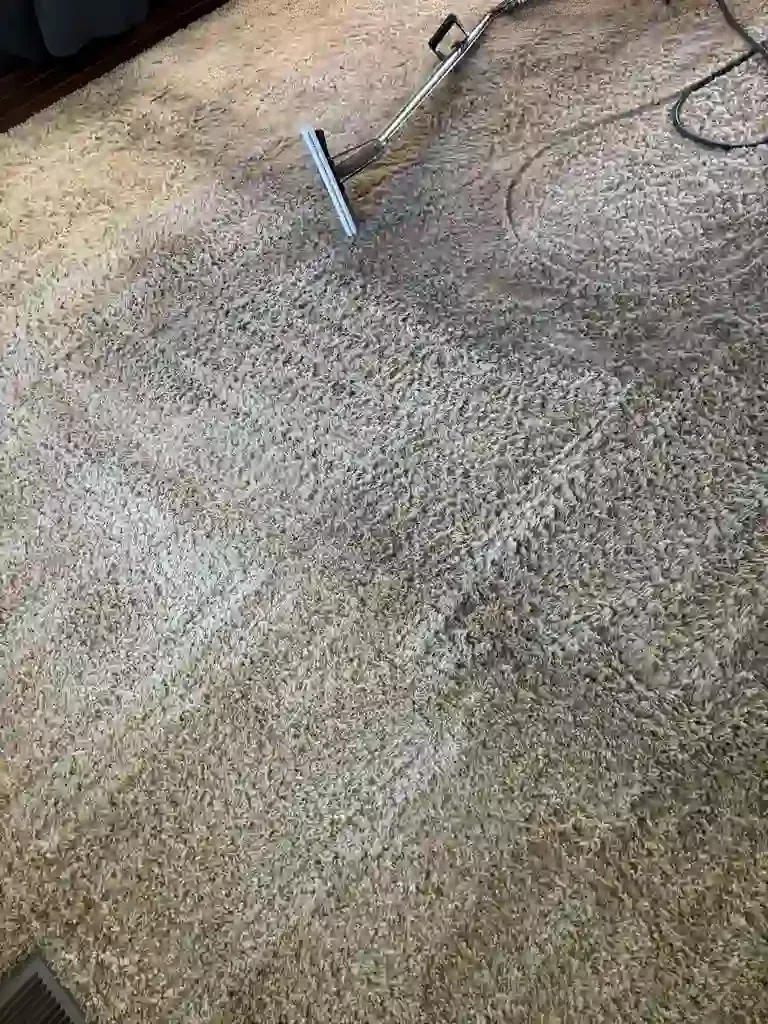
How We Identify What You Are Dealing With — Before We Treat It
Stain Chemistry Classification
Protein stains — pet urine, blood, egg, dairy. Require enzyme chemistry and cool water. Heat denatures protein and bonds it to fiber permanently. A technician who applies hot chemistry to a fresh bloodstain sets it irreversibly.
Tannin stains — coffee, tea, wine, fruit juice. Require acidic chemistry. Alkaline pre-sprays intensify tannin stains rather than removing them — the opposite of the intended result.
Oil-based stains — cooking grease, body oils, cosmetics, tracked-in petroleum. Require alkaline or solvent-based surfactant. Water-based chemistry does not emulsify lipid compounds — it pushes the stain deeper into the fiber.
Combination stains — most real-world food stains. Contain multiple chemistry types requiring sequential treatment in the correct order. Assessed individually before any chemistry is applied.
Unknown or set-in stains — tested with neutral chemistry first. We observe fiber and stain response before committing to a treatment protocol.
Odor Source Classification
Pet urine odor — uric acid salts crystallized in fiber, backing, padding, and potentially sub-floor. Stable when dry. Reactivates with heat and humidity releasing ammonia-based compounds. Source is chemical — requires enzyme treatment, not cleaning.
Bacterial odor — musty, sour, or organic character. From food spills, tracked-in organic material, or post-flooding contamination. Responds to hot water extraction at bactericidal temperature combined with appropriate pre-treatment.
Mold and mildew odor — indicates active biological growth colony established in padding or sub-floor from sustained moisture. Surface cleaning does not eliminate mold odor. Growth colony must be addressed before cleaning proceeds. We advise on appropriate remediation when mold odor is identified during assessment.
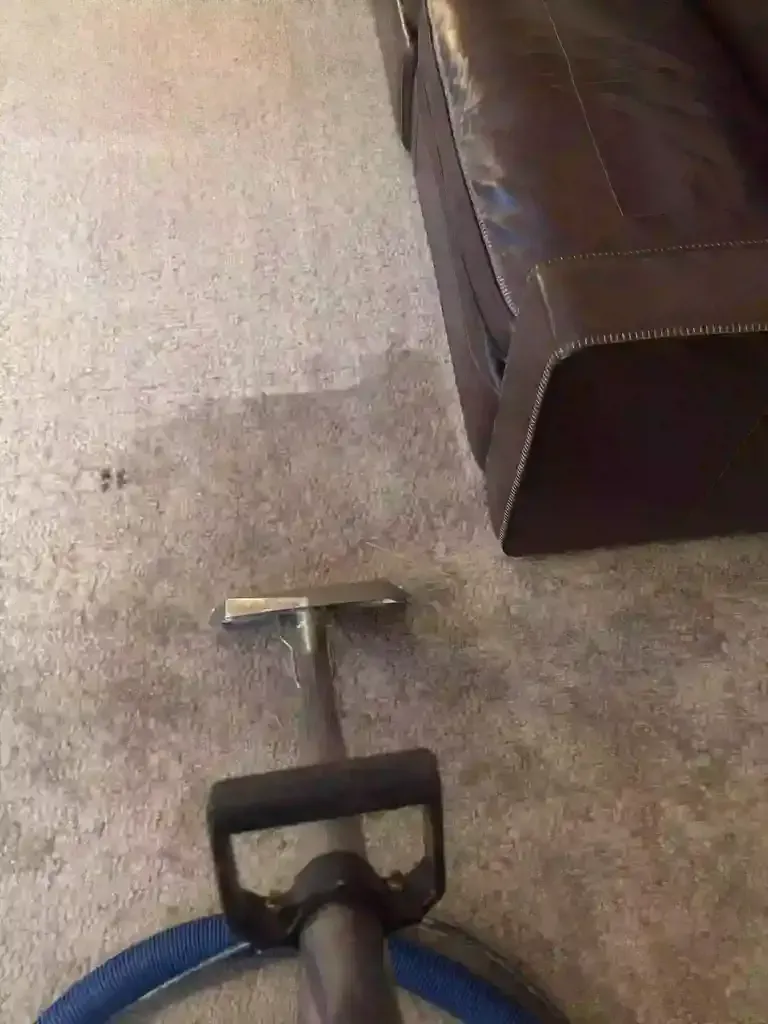
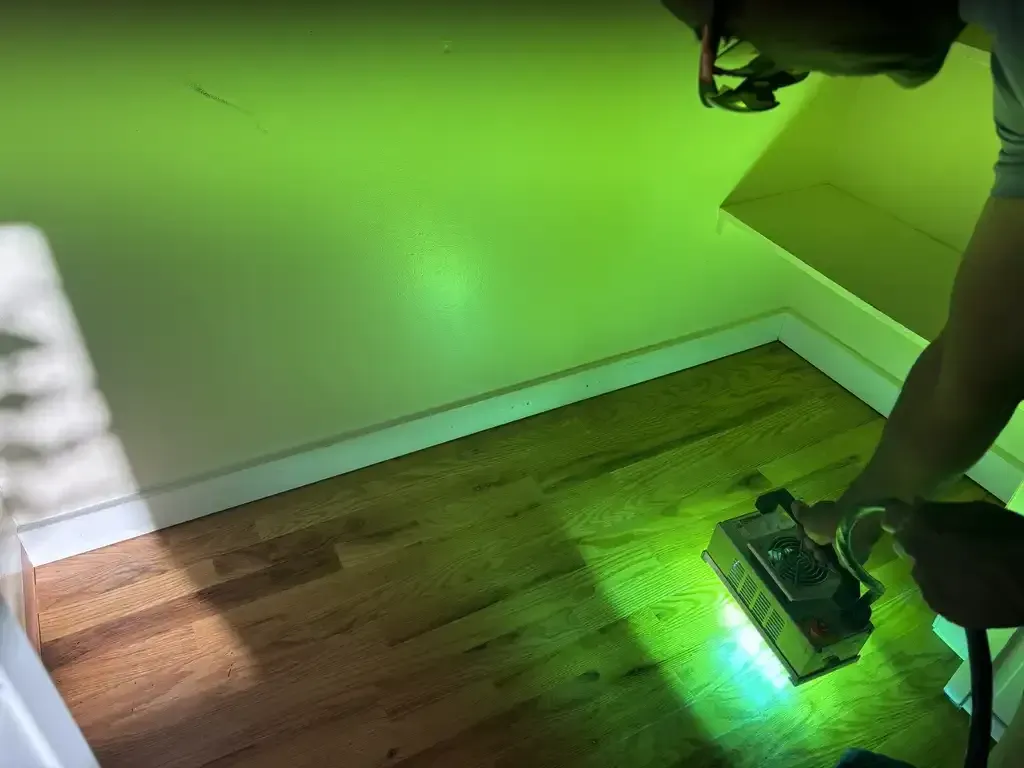
UV Light Inspection
Pet urine fluoresces under ultraviolet light — revealing all contaminated areas including those invisible to the naked eye. Urine spreads laterally through padding, affecting a significantly larger floor area than the surface stain indicates. UV mapping before treatment ensures the full contamination zone is treated — not just the visible stain.
Why Colorado Homes Have More Persistent Pet Urine Odor Problems
Denver Metro homes run forced-air heating for significantly more months than lower-elevation climates. Heated indoor air creates the warm, low-humidity conditions that reactivate uric acid crystals most aggressively. Homeowners frequently notice pet urine odor intensifies in late fall when heating activates — not because contamination worsened but because uric acid reactivation is now consistent and sustained.
Colorado's low ambient humidity causes uric acid crystals to remain stable and dry in summer — creating a false impression the problem has resolved. Heating season returns, and the odor returns at full strength from the same untreated source.
UV light maps contamination whether or not it is currently odor-active — giving you a complete picture of what requires treatment rather than only what is currently noticeable.
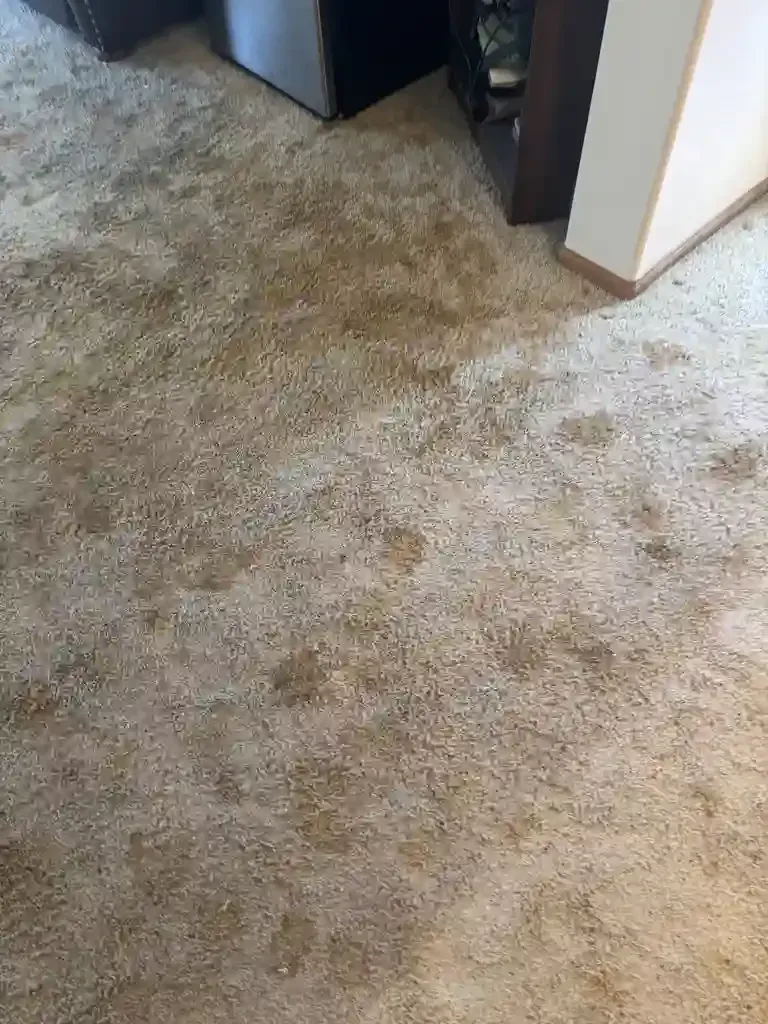
Our Two-Level Pet Stain and Odor Removal Protocol
Topical Enzyme Treatment
Appropriate for single or recent incidents where urine has not repeatedly penetrated through the backing into the padding.
UV light maps the full contamination zone. Professional-grade enzyme pre-treatment is applied at concentration matched to contamination load and allowed to dwell — sufficient contact time is required for the enzyme chemistry to complete molecular breakdown of uric acid. Consumer products fail here not because the chemistry is wrong but because insufficient product at insufficient concentration is applied with no dwell discipline.
A sub-surface extraction tool pulls from the carpet backing, padding surface, and face yarn simultaneously — not the top of the pile only. Enzyme application and extraction cycle repeats until extraction output runs clear — indicating source removal, not dilution.
Remaining surface staining is treated with spot chemistry matched to the stain type.
Restoration Treatment
Required when a pet has used the same area repeatedly or when a single large incident was not discovered for an extended period. Urine has saturated through face yarn, primary backing, full padding thickness, and into the sub-floor — concrete or OSB plywood in most Denver Metro homes. No topical treatment reaches a contamination source in the sub-floor.
We pull back the carpet. Contaminated backing is visually identifiable. Saturated padding is removed and discarded — padding repeatedly soaked with urine cannot be treated in place and produce a lasting result. The exposed sub-floor is treated with penetrating enzymatic sealer that eliminates absorbed uric acid and creates a barrier against re-migration upward. Sealer cures before reinstallation.
Carpet backing and face yarn are treated with enzyme solution at restoration concentration and extracted with sub-surface tool. New padding — same specification as original — is installed. Carpet is reinstalled. Full cleaning pass over treated area follows with spot treatment for remaining surface staining.
Result: permanent odor elimination. The source no longer exists.
Cat Urine vs Dog Urine — Is There a Difference?
Yes. Cat urine contains higher uric acid concentration than dog urine and additional sulfur compounds that do not exist in dog urine. This is why cat urine odor is sharper and more persistent — and why products marketed as cat urine stain and odor removers use higher enzyme concentrations than standard pet formulations. We apply enzyme chemistry calibrated to pet type identified during assessment. For cat urine we extend dwell time and increase concentration to account for the denser uric acid and sulfur compound profile.
Dog urine is deposited in higher volume per incident — greater total saturation depth per event and higher likelihood of sub-floor contamination from single major incidents with large breed dogs.
Stain Removal by Stain Type — What We Remove and What We Cannot
What We Regularly Remove
Pet urine stains — addressed through enzyme protocol above. Surface staining typically removed or significantly lightened. Chronic contamination areas may retain some discoloration after complete odor elimination if dye migration has occurred.
Coffee and tea — tannin chemistry. Fresh stains almost fully removable. Set and oxidized stains require extended treatment but typically resolve with correct chemistry.
Red wine — tannin treatment combined with oxidizing spotting agents. Fresh wine lifts well. Dried and oxidized wine is more challenging. Wine treated with salt or baking soda before we arrive is partially set and may require multiple cycles.
Grease and cooking oil — solvent-based surfactant chemistry. Professional concentration significantly more effective than consumer degreasers on carpet.
Blood — enzyme chemistry with cool water only. Fresh blood is almost fully removable. Dried blood requires enzyme dwell and cool extraction. Blood treated with hot water before we arrive may be partially set.
Mud and soil — allow to dry completely before treatment. Wet mud spreads laterally during treatment. Dry mud vacuumed as particulate, residual addressed with standard pre-spray and extraction.
What We Cannot Remove
We assess honestly before treating. We tell you what outcome to expect before we start.
Bleach damage — not a stain. Dye has been chemically destroyed. No cleaning treatment restores destroyed dye. Carpet dyeing or fiber repair is the appropriate solution.
Furniture dye transfer — dark-colored furniture legs wetting and migrating dye into carpet fiber. Limited response to reducing agents. Results are not predictable.
Permanent set stains — old unknown stains treated repeatedly with multiple consumer products. Pre-testing before treatment establishes expected result before we charge for a service.
Surfaces We Treat for Stain and Odor Removal
Every surface in your home has different fiber chemistry, moisture tolerance, and contamination depth — and requires treatment matched to those properties. Here is how we approach stain and odor removal by surface type.
Carpet
Most complex pet stain environment — contamination exists at multiple depths simultaneously: face yarn, backing, padding, sub-floor. Full two-level protocol applies. UV mapping before treatment.
Hardwood Floors
Pet urine penetrates wood grain and between boards into sub-floor. Surface incidents addressed quickly before finish penetration — enzyme chemistry with strictly controlled low-moisture extraction. Old or deeply penetrated stains may require sub-floor sealing. Excess moisture on hardwood causes warping and finish damage — all treatment uses low-moisture method only.
Area Rugs
Urine penetrates through the rug and pools on the floor surface beneath. The rug backing traps urine against the underlying floor — both the rug and the floor beneath require treatment. We map contamination on both surfaces with UV light before treating.
Upholstery
Pet urine soaks through fabric into cushion foam where uric acid crystallizes. Recent or isolated incidents — enzyme pre-treatment through fabric surface with low-moisture extraction. Chronic contamination saturating foam core fully — foam replacement combined with enzyme treatment of the fabric shell is the only complete solution. We assess during pre-inspection and advise before treatment begins.
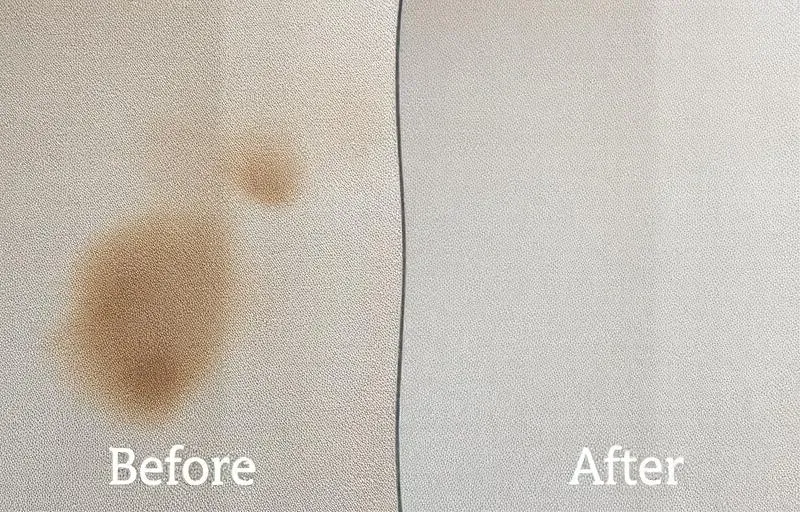
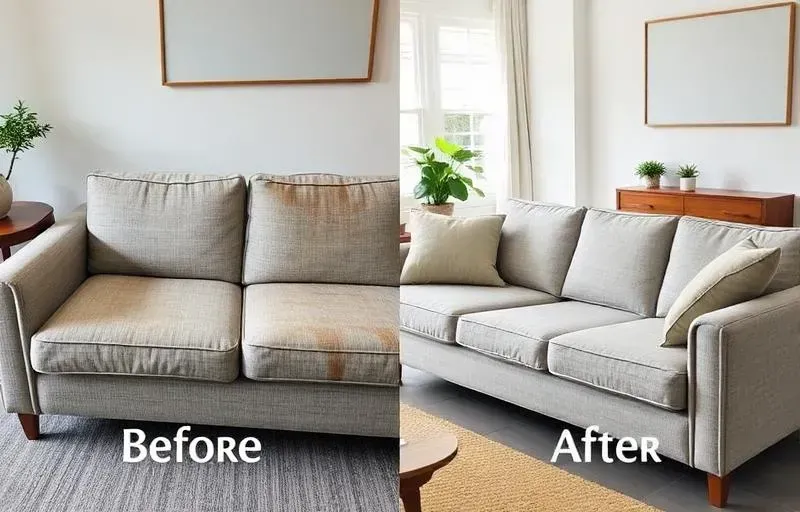
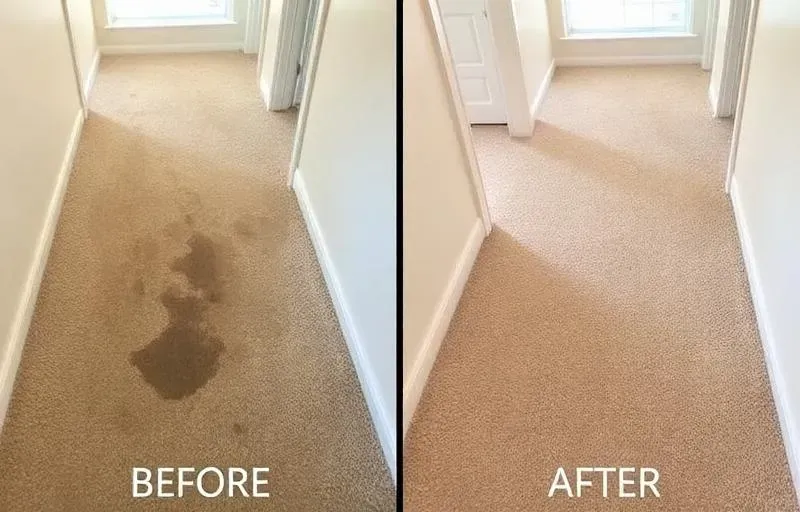
Real Results
See the Difference for Yourself
Reviews
Approved By 290+ Of Denver Metro Customers ✅
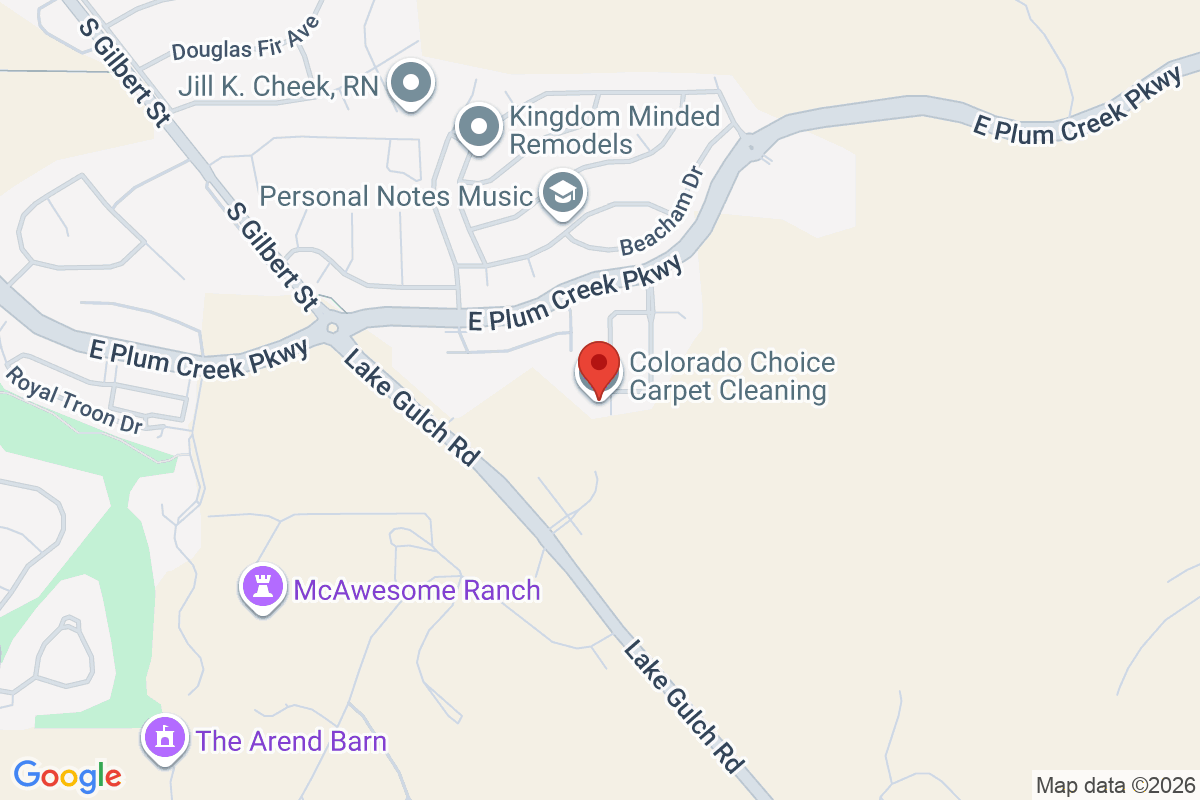
Stain & Odor Removal Service Areas — Denver Metro and Surrounding Cities
We provide IICRC-certified stain and odor removal across 15+ cities in the Denver Metro — same enzyme-based protocol, same professional results, wherever you are.
Douglas County
Arapahoe & Jefferson Counties
Denver & North Metro
Frequently Asked Questions — Stain & Odor Removal
Can pet odor be permanently eliminated from carpet?
Yes — with treatment matched to contamination depth. Topical enzyme treatment eliminates odor where contamination has not reached the sub-floor. Restoration treatment — padding replacement and sub-floor sealing — permanently eliminates odor where contamination has reached the sub-floor. The odor does not return because the source is gone, not suppressed.
Why does pet odor return after carpet cleaning?
Standard carpet cleaning does not dissolve uric acid crystals. The crystals remain in backing, padding, or sub-floor. When heat or humidity activates them the odor returns regardless of how clean the carpet surface looks. Enzyme treatment applied with professional sub-surface extraction is the mechanism that eliminates the source.
How do I know if I need topical or restoration treatment?
Duration and repetition indicate contamination depth. A single recent incident — topical treatment. An area used repeatedly over weeks or months, or odor that returns seasonally when heating activates — sub-floor contamination and restoration treatment. UV inspection during assessment gives you the definitive picture.
Can you remove stains that have already been treated with store products?
Yes in most cases — though previous treatment changes the situation. Consumer product residue affects how professional chemistry interacts with the stain. Multiple products applied sequentially require a rinse pass before targeted treatment. We assess current stain state and advise on expected outcome given treatment history before we start.
Is enzyme treatment safe for children and pets?
Yes. Enzyme chemistry is non-toxic and pet-safe. Keep pets and children out of the treated area until fully dry — typically 2 to 4 hours — to prevent moisture tracking through other areas. Once dry the treated area is fully safe for all household members.
What if I do not know where all the stains are?
UV light inspection maps all urine-contaminated areas whether or not they are currently visible or odor-active. You may find contamination in areas you did not know about and confirm areas you suspected are actually clean. Full mapping before treatment means nothing is missed and nothing is treated unnecessarily.
Professional Stain & Odor Removal Across the Denver Metro — Free Quote, Transparent Pricing
If the odor keeps returning, the stain survived previous cleaning, or you are dealing with a chronic pet situation — the source has not been eliminated. Enzyme-based treatment, UV light inspection, professional sub-surface extraction, and sub-floor restoration for deep contamination. 23 years of IICRC-certified experience serving the Denver Metro.
Call us at (720) 730-8055 or use the online form for a free, upfront quote. We will confirm your service area, scope, and pricing in one call.
Related Services:
We'll text you back within minutes. No spam, ever.
IICRC-certified carpet, tile & upholstery cleaning — Castle Rock, CO and the Denver Metro
Services
Location