🔥 Limited Time Online Only Special — 3 Rooms + Hallway $119 | Book This Week → Claim Offer
Professional Upholstery Cleaning — Denver Metro
Colorado Choice Carpet Cleaning provides IICRC-certified upholstery cleaning across the Denver Metro using fabric-identified, moisture-controlled cleaning protocols...
✅ IICRC Certified — Upholstery Cleaning Technician (UFT)
🧪 Fabric-Code Matched Chemistry
🐾 Pet Stain & Odor Treatment
💨 Low-Moisture, Fast-Drying Method
📍 Denver Metro & Surrounding Cities
Fully certified for carpet, tile & upholstery
Trusted, vetted, and held to the highest standards.

Complete satisfaction or we come back free

5-Star Rated on Google

Business Rate Award Winner 2026
Approved By 300+ Of Denver Metro Customers ✅
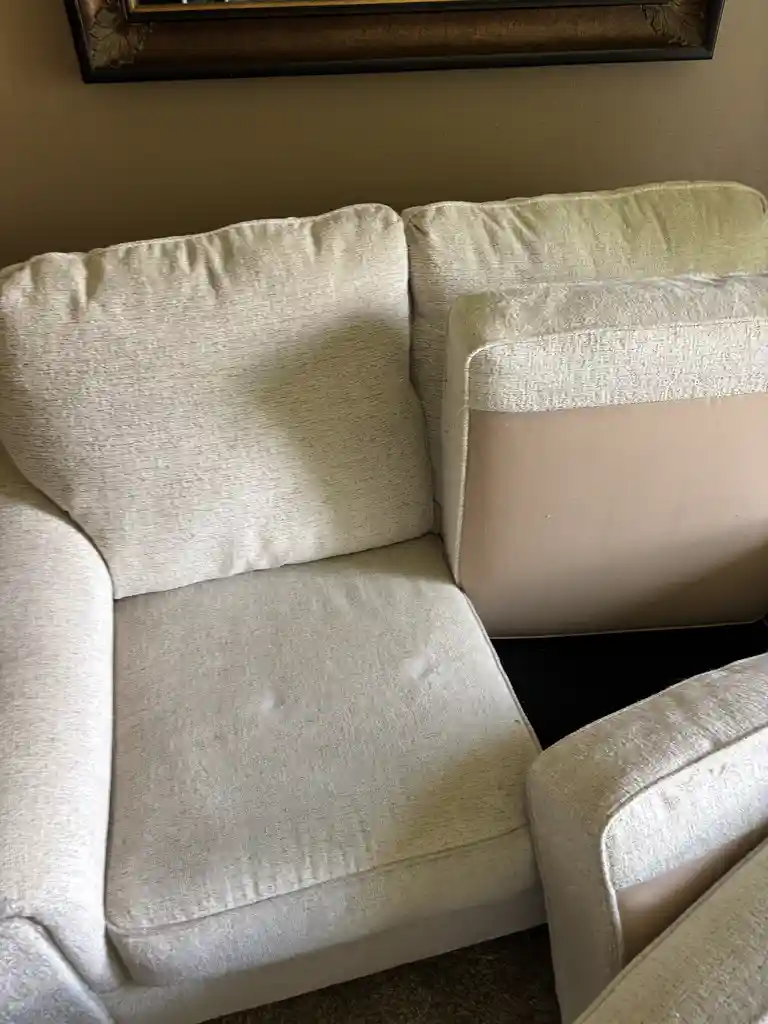
What Your Furniture Is Actually Holding — And Why Vacuuming Is Not Enough
Upholstered furniture functions the same way carpet does — as a passive collection surface for everything that contacts it. The difference is proximity. You sit directly on your sofa. Your skin, clothing, and pets are in constant contact with the fabric. That means the contamination load in upholstery is often higher per square foot than in carpet, concentrated in exactly the areas you spend the most time.
Body oils and skin cells shed during normal contact accumulate in fabric fibers and become the primary food source for dust mite colonies living inside cushion foam and batting. A single sofa cushion can harbor hundreds of thousands of dust mites in an untreated household. Dust mite waste proteins — not the mites themselves — are the allergen that triggers asthma and allergic rhinitis in sensitized individuals.
Pet dander from cats and dogs embeds in upholstery fiber at a depth that vacuuming cannot reach. Pet urine soaks through fabric into cushion foam, where it crystallizes as uric acid and reactivates with heat and humidity exactly the way it does in carpet backing and padding.
Regular vacuuming removes surface debris and some loose particulate. It does not reach the contaminant load embedded in the fiber structure or inside cushion foam. Professional cleaning does.
Why We Identify Your Fabric Before We Touch It — The Fabric Code System
Upholstery fabric is not a uniform material. Microfiber, cotton, linen, velvet, polyester blend, leather, and performance fabric all have different moisture tolerances, pH requirements, and mechanical sensitivities. Applying the same cleaning method to every fabric type is the fastest way to cause permanent damage.
The upholstery industry uses a standardized fabric coding system that defines the safe cleaning method for each fabric type. Every piece of upholstered furniture sold in the US should have a cleaning code tag — typically located under a cushion or on the frame underside.
W — Water-Based Cleaning
W-coded fabrics are safe for water-based cleaning chemistry and appropriate moisture application. Most synthetic fiber upholstery — polyester blends, nylon, olefin — falls into this category. Hot water extraction with low-residue chemistry is appropriate for W-coded fabrics. See how we cleaned a coffee stain from a cream sectional in a Denver high-rise.
W/S — Water or Solvent
W/S-coded fabrics tolerate either water-based or solvent-based cleaning. We select the method based on the specific soiling type and the fabric's visual and structural condition.
S — Solvent-Based Cleaning Only
S-coded fabrics cannot tolerate water-based cleaning. Water causes shrinkage, color bleed, or fiber distortion in S-coded materials — which include many natural fiber fabrics such as rayon, acetate, and some silks. S-coded fabrics require dry-cleaning solvent chemistry applied with controlled low-moisture methods. Water applied to an S-coded fabric is a common DIY cleaning mistake that causes irreversible fabric damage.
X — Vacuum Only
X-coded fabrics cannot tolerate any liquid cleaning — water or solvent. They require vacuuming only. Professional cleaning with any liquid chemistry on an X-coded fabric causes damage. We identify X-coded fabrics before service and advise you of the cleaning limitation rather than proceeding with a method that will cause harm.
What If There Is No Tag?
When a fabric code tag is missing or illegible, we perform a fiber identification assessment — examining the fabric weave, fiber behavior under tension, and response to a small water spot test in a hidden location. We do not proceed with any cleaning method until we are confident in the fabric's safe cleaning parameters.
Upholstery Fabric Types — What Each Requires
Microfiber Upholstery Cleaning
Microfiber is one of the most commonly cleaned upholstery fabrics and one of the most frequently damaged by incorrect DIY cleaning. Microfiber is a tightly woven synthetic fabric — typically polyester — with extremely fine fiber strands that create a soft, suede-like surface texture. It is durable, stain-resistant, and usually W or W/S coded.
The problem with DIY microfiber cleaning is water marks. When water is applied to microfiber and allowed to air dry without proper extraction, the dissolved minerals in the water deposit on the fiber surface as the moisture evaporates — creating visible water ring marks that make the cleaned area look worse than before. Professional cleaning extracts moisture during the cleaning process, preventing water ring formation.
Cotton and Linen Upholstery Cleaning
Cotton and linen are natural fiber fabrics that require careful moisture control. Both fibers are absorbent and swell when wet — over-wetting causes shrinkage and potential color bleed on dyed fabrics. We use controlled low-moisture water-based chemistry for cotton and linen, applying sufficient moisture to clean without saturating the fiber.
Velvet and Chenille Upholstery Cleaning
Velvet and chenille have a directional pile — the fiber strands are cut at a uniform height and oriented in a specific direction that creates the characteristic soft sheen. Cleaning velvet or chenille incorrectly crushes the pile or reverses its direction, creating permanent dull patches or streaks that cannot be corrected after the fabric dries.
We clean velvet and chenille with chemistry and extraction tools that preserve pile direction, followed by pile grooming in the correct nap direction during drying.
Performance Fabric Upholstery Cleaning
Performance fabrics — Sunbrella, Crypton, Revolution, and similar branded performance upholstery textiles — are engineered for stain resistance and moisture repellency. They are typically W-coded and highly tolerant of water-based cleaning. The cleaning challenge with performance fabrics is not the fabric itself but the tendency for soil to concentrate in surface texture patterns rather than penetrating the fiber — which responds well to agitation-assisted extraction.
Leather Upholstery Cleaning
Leather requires a completely different approach from fabric upholstery — it is not cleaned with water-based extraction chemistry. We use leather-specific pH-balanced cleaners and conditioning agents that clean the leather surface, maintain the leather's natural oils, and protect the finish. Over-wetting leather causes cracking and finish damage. We assess leather type — aniline, semi-aniline, pigmented, or bonded leather — before any product is applied.
Pet Stain and Odor Removal from Upholstery — When Surface Treatment Is Not Enough
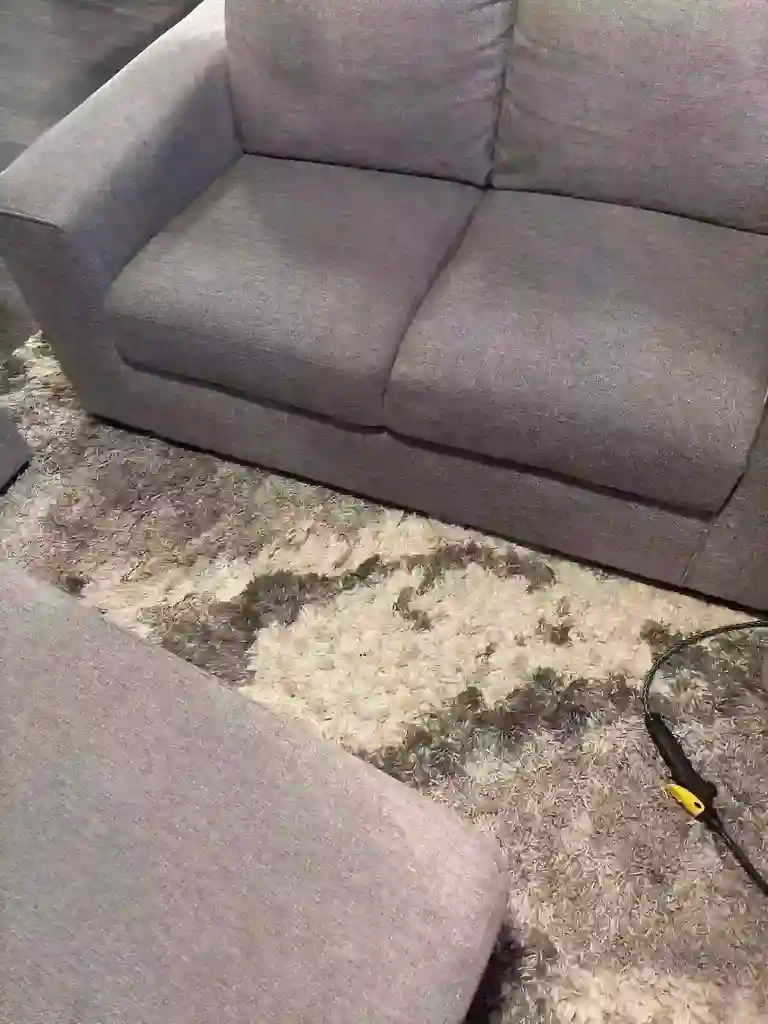
Pet urine on upholstery follows the same contamination pathway as pet urine on carpet — but the geometry is more contained and the foam core more absorbent. Urine soaks through the fabric surface into the cushion foam within seconds of the incident. In the foam, uric acid crystallizes as it dries and reactivates with heat and humidity the same way it does in carpet padding.
For recent or isolated pet urine incidents, enzyme pre-treatment applied through the fabric surface with professional low-moisture extraction addresses the contamination at the fabric and upper foam level. This approach works when the incident was isolated and addressed within a reasonable timeframe.
For chronic pet contamination — a cat that has used one cushion repeatedly, a dog that has marked a sofa corner over weeks — the foam core is saturated with uric acid through its full thickness. In these situations, the only complete solution is cushion foam replacement combined with enzyme treatment of the fabric shell. We assess the contamination level during pre-inspection and advise honestly on whether topical treatment will produce a lasting result or whether foam replacement is the appropriate recommendation.
Upholstery Cleaning and Indoor Air Quality — The Allergen Load You Cannot See
Research on indoor allergen distribution consistently shows that upholstered furniture carries allergen concentrations comparable to or exceeding carpet in the same room — because the combination of direct skin contact, warmth, and the food source provided by shed skin cells creates ideal dust mite conditions inside cushion foam and batting.
Dust mite populations in uncleaned upholstery produce waste proteins that become airborne during normal use — sitting down, shifting position, and removing cushions all disturb allergen-laden dust from the fabric surface into the breathing zone. For households with asthma or allergic rhinitis, regular upholstery cleaning is as relevant to allergen management as carpet cleaning.
Pet dander in upholstery is particularly persistent because the fiber adhesion of dander particles in fabric weave is stronger than in carpet pile. Regular professional cleaning maintains dander load below allergen-triggering thresholds in pet households.
Upholstery Cleaning in the Denver Metro — Colorado Climate Considerations
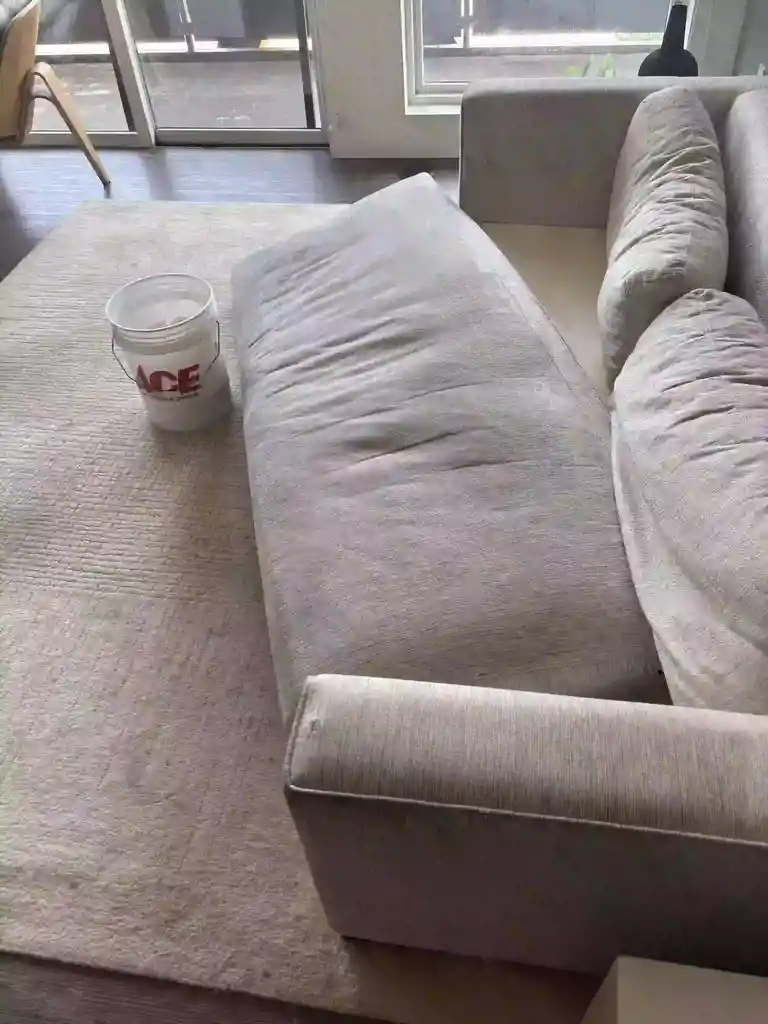
Colorado's low-humidity climate and forced-air heating season create specific conditions that affect upholstery differently than in higher-humidity regions.Dry indoor air accelerates moisture evaporation from fabric surfaces — meaning spills and pet incidents dry faster, which can make contamination appear resolved when it has simply crystallized deeper in the fiber and foam.
Uric acid in particular becomes stable and odor-inactive when dry in Colorado's low-humidity environment, only to reactivate when the heating season returns and indoor temperatures rise.Forced-air heating runs for significantly more months at Denver Metro elevations than in lower-elevation climates. This sustained heat cycling reactivates crystallized uric acid compounds in upholstery foam repeatedly through the heating season — which is why Denver Metro homeowners often notice pet odor from furniture intensifies in late fall when heating activates, even from incidents that occurred months earlier.Colorado's high-altitude UV exposure also accelerates fabric fading and fiber degradation on furniture near windows.
Regular professional cleaning removes the soil and oil accumulation that amplifies UV-related color loss — soil on the fiber surface concentrates UV energy on the fiber rather than reflecting it.Low humidity also means static charge builds more readily on synthetic upholstery fabrics, attracting and holding airborne particulate — dust, pollen, and pet dander — at a higher rate than in humid climates. Professional extraction removes this accumulated particulate load from the fiber structure.
Our Upholstery Cleaning Process — Step by Step
| Step | Label | Content Summary |
|---|---|---|
| 01 | Pre-Inspection | Fabric code identification, fiber type verification, soiling level assessment, and cushion compression evaluation to determine correct cleaning methodology. |
| 02 | Pre-Vacuuming | Removal of dry particulate soil and loose debris prior to moisture introduction to prevent mudding and improve extraction efficiency. |
| 03 | Pre-Treatment | Application of pH-matched cleaning solutions selected according to fabric code classification and soil composition. |
| 04 | Agitation | Controlled soft-bristle grooming to distribute cleaning agents evenly through the fiber structure while protecting fabric durability. |
| 05 | Low-Moisture Extraction | Moisture-controlled extraction removes dissolved soil, suspended contaminants, pre-treatment chemistry, and allergen load from the fiber structure. Extraction volume is calibrated to fabric moisture tolerance — lower moisture for natural fibers and S/W-S coded fabrics, and standard moisture levels for durable synthetic and performance fabrics. |
| 06 | Spot Treatment | Targeted stain removal using specialty chemistry selected according to stain classification to safely address persistent spots without affecting surrounding fibers. |
| 07 | Pile Grooming & Drying | Directional pile grooming restores fabric alignment, cushions are positioned for airflow optimization, and professional drying guidance is provided to accelerate moisture evaporation. |
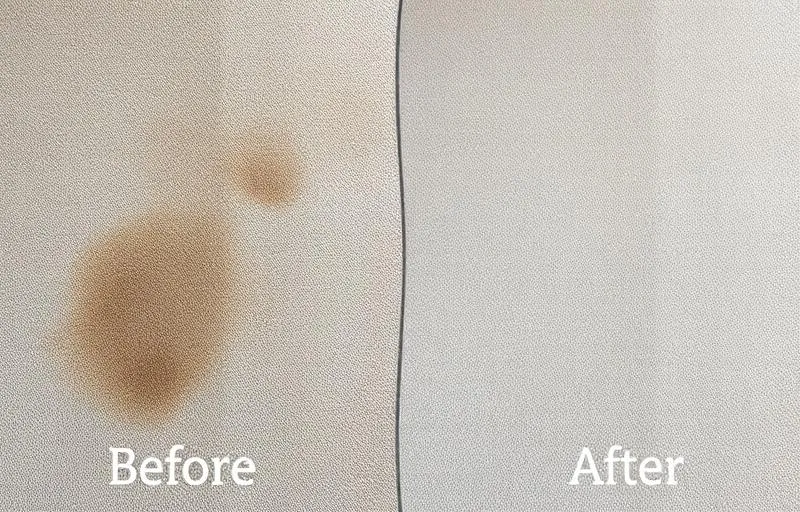
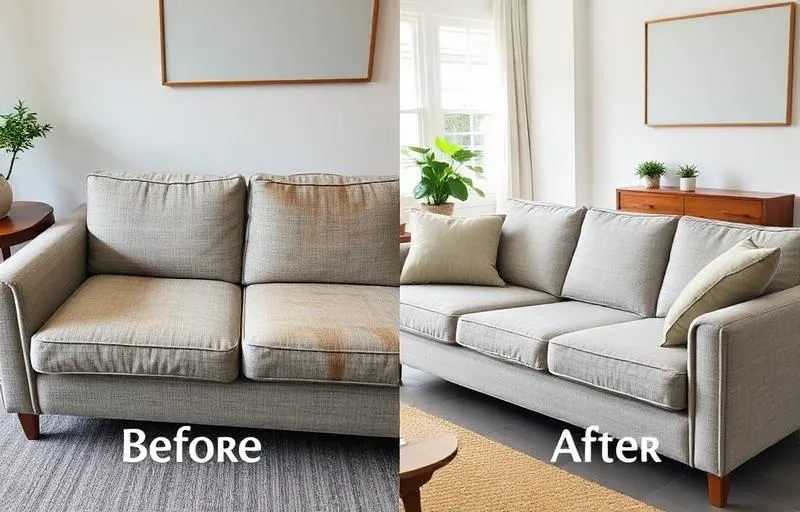
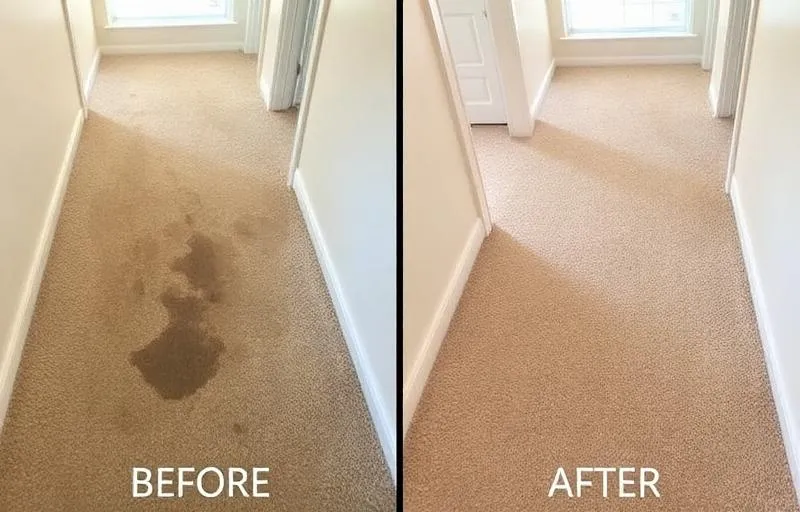
Real Results
See the Difference for Yourself
Upholstery Cleaning Service Areas — Castle Rock and the Denver Metro
We provide IICRC-certified upholstery cleaning across 15+ cities in the Denver Metro — fabric-identified, moisture-controlled cleaning matched to your furniture type, wherever you are.
Douglas County
Arapahoe & Jefferson Counties
Denver & North Metro
Frequently Asked Questions — Upholstery Cleaning
How often should upholstery be professionally cleaned?
Every 12 to 18 months for average households. Pet households and homes with allergy or asthma sufferers benefit from cleaning every 6 to 12 months to manage dander and dust mite allergen load.
Can you clean a sofa that has pet urine in the cushion foam?
Yes — with realistic expectations based on contamination depth. Isolated incidents respond to enzyme pre-treatment and extraction. Chronic contamination saturating the foam core requires foam replacement for complete odor elimination. We assess during pre-inspection and advise before treatment begins.
Will cleaning cause my upholstery to shrink or water-mark?
Not with correct fabric identification and moisture-controlled extraction. Shrinkage and water marks result from over-wetting and incorrect chemistry — specifically applying water-based methods to S-coded fabrics or allowing water to air-dry on microfiber without extraction. Our process controls moisture input and extracts during cleaning.
Can you clean velvet furniture?
Yes. Velvet requires specific pile-direction-aware cleaning with appropriate agitation and grooming during drying. We clean velvet with chemistry and tools that preserve the nap rather than crushing or reversing it.
Do you clean outdoor furniture cushions?
Yes. Outdoor cushion fabrics — typically Sunbrella or similar performance fabrics — are highly tolerant of water-based cleaning. Outdoor cushions accumulate pollen, mold spores, bird droppings, and general outdoor soil that responds well to professional extraction. We clean outdoor cushion covers in place or after removal depending on the furniture design.
How long does upholstery take to dry after cleaning?
Typically 2 to 4 hours under normal indoor airflow conditions. Running a ceiling fan or portable fan reduces drying time. Avoid sitting on cleaned upholstery until fully dry to prevent moisture transfer to clothing and to allow the fabric pile to dry in its natural position.
Can you remove ink stains from upholstery?
Ink stain removal from upholstery depends on ink type and fabric code. Ballpoint ink — oil-based — responds to solvent-based spot treatment on W/S and S-coded fabrics. Water-based inks respond to careful water-based extraction on W-coded fabrics. Permanent marker and printer ink are the most resistant and may only partially respond to treatment. We test in a hidden area before full treatment and advise on expected outcome before we proceed. Fresh ink always responds better than dried and set ink — contact us as soon as possible after the incident.
Professional Upholstery Cleaning Across the Denver Metro — Free Quote, Upfront Pricing
Fabric identified before treatment. Moisture controlled during cleaning. Pile groomed after extraction. 23 years of IICRC-certified upholstery cleaning experience across the Denver Metro.
Call (720) 730-8055 for a free quote — tell us what furniture needs cleaning and what fabric type it is if you know it. We will give you a clear price and an honest assessment before we arrive.
We'll text you back within minutes. No spam, ever.
IICRC-certified carpet, tile & upholstery cleaning — Castle Rock, CO and the Denver Metro
Services
Location
