🔥 Limited Time Online Only Special — 3 Rooms + Hallway $119 | Book This Week → Claim Offer


5-Star Rated · IICRC Certified · 23+ Years
Hardwood Floor Cleaning in Castle Pines, CO — Low-Moisture, pH-Neutral Protocol for Douglas County's Highest Elevation Homes
Castle Pines has the longest heating season and lowest indoor humidity of all our Tier 1 cities — hardwood board contraction from October through April makes moisture-sensitive cleaning more critical here than anywhere else we serve.
Castle Pines hardwood faces the most demanding climate conditions of any Tier 1 service city — seven months of forced-air heating at 6,200 to 6,800 feet creates the most sustained low-humidity indoor environment and the most aggressive seasonal board contraction window in our service area. Colorado Choice Carpet Cleaning provides professional hardwood floor cleaning across Castle Pines Village, The Canyons, Castle Pines North, and Castle Valley using low-moisture, pH-neutral protocol matched to finish type — identified before any chemistry is applied — and calibrated to Castle Pines' extended seasonal hardwood stress cycle.
Fully certified for carpet, tile & upholstery

Trusted, vetted, and held to the highest standards.

Complete satisfaction or we come back free

5-Star Rated on Google

Business Rate Award Winner 2026
Approved By 300+ Of Castle Pines Customers ✅

Why Hardwood Floor Cleaning Is More Demanding in Castle Pines
Seven Months of Heating Season — The Most Aggressive Contraction Window in Our Service Area
Solid hardwood releases moisture and contracts during Castle Pines' forced-air heating season. At 6,200 to 6,800 feet — the highest elevation of all our Tier 1 service cities — Castle Pines experiences board contraction at the lowest ambient humidity and for the longest duration of any community we serve. Board edges pull away from adjacent boards as they shrink — opening micro-gaps at seams that did not exist in summer. These micro-gaps are the critical Castle Pines hardwood cleaning consideration¹. Any moisture introduced during the contraction window — from wet mopping, steam cleaning, or over-application of cleaning solution — enters the board seams directly, reaching the wood substrate. Differential expansion follows — the board swells as it absorbs cleaning moisture while ambient humidity at Castle Pines elevation remains the lowest of all Tier 1 cities — causing cupping that may be permanent.
May or June is the optimal Castle Pines hardwood cleaning window — later than the April recommendation for lower-elevation Tier 1 cities like Castle Rock. At 6,200 to 6,800 feet, the heating season runs longer and boards take additional weeks after April to fully stabilize. Cleaning in late May when boards have closed their contraction gaps produces the lowest moisture-entry risk of the year.
Castle Pines Hard Water Mineral Film on Hardwood Finish
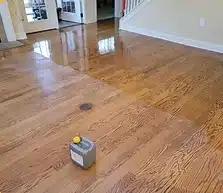
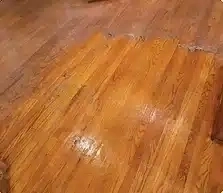
Douglas County hard water from the Denver Basin aquifer deposits calcium and magnesium mineral film on polyurethane-finished hardwood with every mop pass — the same mechanism affecting Castle Pines LVT and tile grout, but on a finish surface that cannot tolerate the acid-based descaling chemistry safe on ceramic tile. At Castle Pines elevation — 6,200 to 6,800 feet — evaporation is faster than at any lower-elevation Tier 1 city, meaning mineral deposits form faster per mop cycle on Castle Pines hardwood finish than at Castle Rock, Highlands Ranch, or any other Tier 1 location. The subtle white haze or cloudiness dulling the finish sheen on Castle Pines hardwood is hard water mineral film accumulating cycle after cycle — professional low-moisture pH-neutral cleaning with mineral-targeting chemistry removes it without the moisture risk or alkaline chemistry that would damage the finish.
Dual Abrasive Grit — Red Clay and Pine Forest Particulate on Hardwood Finish
Castle Pines hardwood faces a dual abrasive scratch risk that lower-elevation flat suburban markets do not. Red clay iron oxide from Douglas County terrain and decomposed pine forest particulate — sandstone grit and granite particles from the surrounding forest floor — both track into Castle Pines homes on footwear. Both are more abrasive than standard urban prairie soil. If either soil type is present on the hardwood surface when wet cleaning begins — dragged across the polyurethane finish by the cleaning motion — microscopic scratches accumulate in the finish surface over time, dulling sheen and increasing surface roughness that attracts subsequent soil adhesion. Pre-vacuuming with a soft-bristle attachment before any wet cleaning phase removes both abrasive soil types before they become cleaning-induced finish damage.
Steam Cleaning — Highest Risk at Castle Pines Elevation During Heating Season
Steam mops apply high-temperature vapor and condensed moisture to hardwood finish and board seams. At Castle Pines elevation during the October through April contraction window — when board seams are already at maximum opening — steam moisture entering those gaps causes grain raising, finish lifting, and board cupping that may not reverse when the board dries. The risk is highest in Castle Pines specifically because the seam gaps are largest here due to the longest and most severe heating season of all Tier 1 cities. Most hardwood manufacturers explicitly void warranties for steam cleaning. We do not use steam on hardwood under any circumstances — Castle Pines or otherwise.

How We Know Castle Pines
Three Castle Pines hardwood patterns shaped the protocol we use here — each came from an outcome that was not what we expected.
The May/June timing discovery came from applying the Castle Rock April recommendation to early Castle Pines hardwood cleaning jobs. April is the right timing for Castle Rock — heating season ends and boards have stabilized by late April at Castle Rock elevation. At Castle Pines elevation, we arrived on April jobs where boards had not fully closed their contraction gaps. The micro-gaps still present in April at Castle Pines produce a meaningful moisture-entry risk even with low-moisture protocol. Pushing the Castle Pines optimal window to May or June — allowing boards the additional stabilization time that Castle Pines' longer heating season requires — produced cleaning results without the cupping risk that April jobs were carrying at this elevation.
The oil finish identification for Castle Pines Village came from the same early learning that shaped the wool upholstery and natural stone protocols for this community. Castle Pines Village engineered hardwood in higher-value homes frequently has oil finish rather than polyurethane — and standard consumer hardwood floor products are film-forming, which conflicts with the open-grain oil finish surface. Leaving a film-forming product residue on oil-finished hardwood dulls the surface in the way that a consumer product on bare wood would — the residue sits on the grain surface rather than absorbing with the oil finish. Identifying oil finish on arrival and applying oil-compatible pH-neutral formulation was the protocol adjustment that produced the correct result.
The dual abrasive pre-vacuum protocol is more intensive in Castle Pines than in Castle Rock or Highlands Ranch — not because the pre-vacuuming motion is different, but because the Castle Pines dual soil profile (red clay plus pine forest grit simultaneously) requires a longer, more thorough pass with the soft-bristle attachment before wet cleaning begins. We extended the Castle Pines pre-vacuum time specifically after seeing granite particulate from the forest floor producing visible finish scratching on a job where the pre-vacuum pass was performed at Castle Rock duration.
Hardwood Finish Identification — What Castle Pines Homes Have and What Each Requires
Polyurethane-Finished Hardwood
Most common finish across Castle Pines residential hardwood — oil-based or water-based polyurethane protective coating. pH-neutral chemistry only — alkaline above pH 8 degrades polyurethane bond with repeated application. Low-moisture application and immediate extraction. Castle Pines hard water mineral film removed with pH-neutral mineral-targeting formulation — not acid-based descalers safe on ceramic but damaging to polyurethane. No steam. No wet mopping.
Engineered Hardwood
Common in Castle Pines Village and The Canyons — real wood veneer over plywood or HDF core. Veneer layer has the same finish sensitivity as solid hardwood. Core provides dimensional stability but Castle Pines heating season veneer contraction — micro-gap risk at veneer seams October through April — requires low-moisture protocol strictly applied. Modern finish types in The Canyons newer builds — UV-cured polyurethane and oil finish — identified on arrival before chemistry selection.
Oil-Finished Hardwood
Penetrating oil finish soaking into the wood grain rather than forming a surface film — present in some Castle Pines Village and Canyons higher-value homes. Film-forming cleaners conflict with open-grain finish surface. pH-neutral oil-compatible chemistry only. No standard polyurethane floor cleaner products on oil-finished surfaces.
Waxed Hardwood
Less common in Castle Pines than in older communities like Wheat Ridge or Applewood — but present in some older custom homes in Castle Pines Village that retain original wax finish. Water-based cleaners strip wax permanently — wax-compatible dry chemistry only. Water-drop test performed on arrival confirms wax versus polyurethane before any chemistry is selected. No wet cleaning of any kind on waxed hardwood.
Our Hardwood Floor Cleaning Process for Castle Pines Homes
Step 1 — Finish Identification and Seasonal Assessment
Finish type confirmed — polyurethane, wax, oil, or unsealed — before any chemistry is applied. Water-drop test performed where finish history is unclear — water beading confirms polyurethane, absorption confirms wax or oil. Seasonal timing noted — cleaning during October–April heating season contraction window receives maximum moisture restriction. Castle Pines contraction window is longer than any other Tier 1 city — maximum moisture restriction applied from October through April. Existing damage — cupping, finish hazing, seam gaps, finish lifting — identified and discussed before any cleaning commitment is made.
Step 2 — Pre-Vacuuming — Dual Abrasive Grit Removal
Soft-bristle vacuum attachment removes all Castle Pines abrasive surface particulate — red clay iron oxide grit and pine forest decomposed granite particles — before any wet cleaning begins. Road treatment chemical crystals from October through April also removed during pre-vacuuming pass. This step is more impactful in Castle Pines than in any other Tier 1 city given the dual abrasive soil profile — two abrasive soil types present simultaneously rather than one.
Step 3 — pH-Neutral Pre-Treatment — Finish-Matched and Moisture-Controlled
pH-neutral cleaning solution matched to finish type applied at minimum effective moisture volume using a slightly dampened microfiber pad — not a wet mop. For polyurethane finish — residue-free pH-neutral formulation with mineral-targeting component for Castle Pines hard water film removal. Application volume calibrated to Castle Pines seasonal contraction window — October through April application uses the most conservative moisture level in the service area given the longest board contraction window. For waxed hardwood — wax-compatible dry chemistry only. For oil finish — pH-neutral oil-compatible formulation only.
Step 4 — Low-Moisture Agitation and Controlled Extraction
Non-abrasive microfiber agitation follows wood grain direction — cross-grain agitation creates visible scratching in finish surface. Agitation intensity matched to finish type — gentle on waxed and oil-finished surfaces, standard on polyurethane. No abrasive pads under any circumstances on any hardwood finish type. Cleaning solution and dissolved contamination extracted immediately — no air-drying on Castle Pines hardwood. Air-drying cleaning solution re-deposits Castle Pines hard water minerals from the solution water on the finish surface and extends moisture contact time on board seams during the contraction window.
Best Time to Clean Castle Pines Hardwood Floors — Seasonal Guidance
May and June — Optimal
Heating season has fully ended and boards have stabilized after Castle Pines' longest heating season of all Tier 1 cities. Micro-gaps have closed as indoor humidity begins summer recovery. Road treatment chemical accumulation at maximum — post-winter cleaning removes full seasonal deposit. Optimal moisture-entry risk profile at Castle Pines elevation. If only one annual cleaning is scheduled, May is the right window.
Summer — June to August — Second Best
Board expansion from summer humidity closes all contraction gaps. Lowest moisture entry risk at seams of the entire year. Slightly longer drying time than May given higher ambient humidity — still within low-residue extraction parameters. Second best timing for Castle Pines hardwood after May.
October — Pre-Heating Season
Second recommended cleaning cycle for Castle Pines hardwood. Removes summer accumulation — red clay and pine forest grit — before heating season activates. Road treatment season begins in October — cleaning in early October captures clean board seam profile before chloride compounds begin tracking in. October is when boards are at their most stable before the seven-month contraction window begins — last low-risk opportunity before November through March.
November Through March — Highest Risk Window
Maximum contraction gap opening during Castle Pines' peak heating season — longest and most severe of all Tier 1 cities. Most conservative moisture protocol applied. Elective cleaning deferred to May when possible. Urgent or emergency cleaning proceeds with absolute maximum moisture restriction and immediate extraction.
What to avoid on Castle Pines hardwood during the heating season contraction window (November through March):
Steam mops — highest risk period for seam moisture entry, grain raising, and cupping
Wet mopping — solution pooling at seam edges during maximum contraction gap opening
Consumer floor cleaners above pH 8 — degrades polyurethane bond with repeated use
Acidic descalers — safe on ceramic tile but etches polyurethane finish surface
Delaying pre-vacuuming — red clay and pine grit dragged across finish during wet cleaning scratches polyurethane surface
OUR 4 EASY STEPS
How to Book Hardwood Floor Cleaning in Castle Pines — 4 Steps
01
Call or Submit Online

Call (720) 730-8055 or submit the online form. Hardwood finish type (polyurethane, wax, oil), community (Castle Pines Village, The Canyons, Castle Pines North, Castle Valley), seasonal timing, and specific concerns confirmed on the call.
02
Free Upfront Quote

Accurate quote before scheduling. Finish identification and seasonal protocol — May to June optimal timing noted. Castle Pines Village engineered hardwood and oil finish protocol confirmed and included. No door-step additions — what we quote is what you pay.
03
Scheduled or Same-Day Appointment

Morning, afternoon, and after-hours slots available. Same-day — call before noon for best availability. Emergency — call directly for immediate response from our Castle Rock base.
04
Certified Service & Results

Finish identification before any chemistry is applied. Pre-vacuuming dual abrasive soil before wet cleaning. pH-neutral mineral-targeting chemistry at minimum moisture. Immediate extraction — no air-drying. Post-cleaning inspection under raking light. Completion walkthrough before leaving.
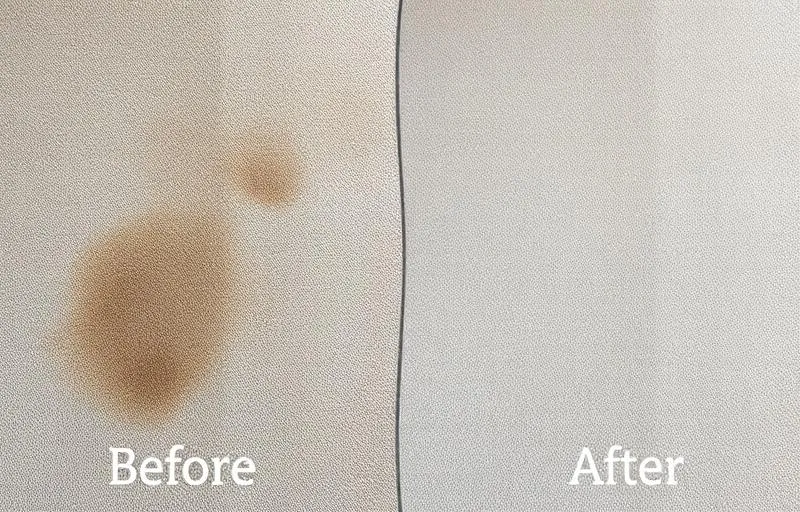
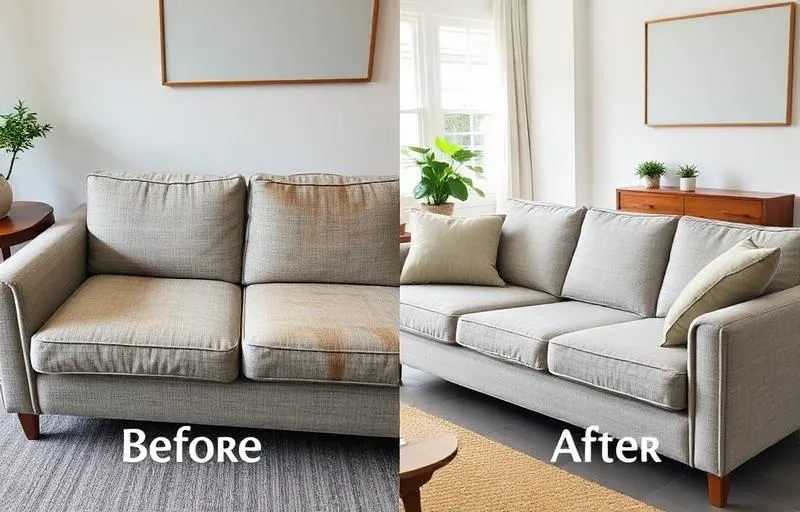
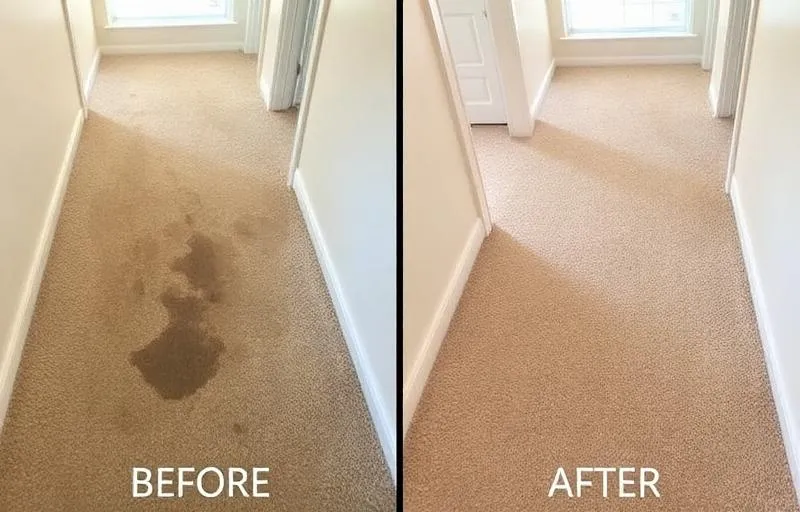
Real Results
See the Difference for Yourself
Related Services and Pages
Castle Pines City Hub
Emergency Carpet Cleaning in Castle Pines
Castle Pines Specialized Sections
Carpet Cleaning in Castle Pines
Stain & Odor Removal in Castle Pines
Tile & Grout Cleaning in Castle Pines
LVT Floor Cleaning in Castle Pines
Upholstery Cleaning in Castle Pines
FAQs
Frequently Asked Questions — Hardwood Floor Cleaning in Castle Pines, CO
Why does my Castle Pines hardwood finish look dull and hazy despite regular cleaning?
Two Castle Pines-specific causes. First — Douglas County hard water from the Denver Basin aquifer at hard to very hard rating deposits calcium and magnesium mineral film on polyurethane finish with every mop pass. At 6,200 to 6,800 feet elevation — the highest of all our Tier 1 cities — Colorado's low humidity accelerates evaporation, meaning mineral deposits form faster here than at Castle Rock, Highlands Ranch, or any other Tier 1 location. Second — cleaning product residue from most consumer floor cleaners builds a dull film on finish with repeated application. Professional low-moisture pH-neutral cleaning removes both mineral film and residue buildup — restoring finish clarity without stripping or abrasive action.
Is May or June the best time to clean Castle Pines hardwood?
Yes — May or June is the optimal timing for Castle Pines hardwood cleaning, later than the April recommendation for lower-elevation Tier 1 cities. At 6,200 to 6,800 feet, Castle Pines' heating season runs the longest of all Tier 1 cities — boards require additional weeks after April heating season ends to fully stabilize their contraction gaps before professional cleaning. May or June cleaning produces the lowest moisture-entry risk at board seams of any timing window. October is the recommended second annual cycle — cleaning before road treatment season begins and heating season reactivates.
Can steam cleaning damage Castle Pines hardwood more than in lower-elevation cities?
Yes — and specifically during the heating season contraction window. Steam applies high-temperature vapor and condensed moisture to hardwood seams. In Castle Pines during October through April, board seams are at their maximum opening from the longest contraction window in our Tier 1 service area. Steam moisture entering maximally contracted Castle Pines board seams causes grain raising, finish lifting, and cupping at higher severity than at lower-elevation cities with shorter contraction windows. Most hardwood manufacturers void warranties for steam cleaning. We do not use steam on hardwood under any circumstances.
My Castle Pines Village home has engineered hardwood with what looks like an oil finish — how is that cleaned differently?
Oil-finished hardwood uses a penetrating oil that soaks into the wood grain rather than forming a surface film like polyurethane. Film-forming cleaners — including most consumer hardwood floor products — conflict with the open-grain oil finish surface and leave a dulling residue layer. We identify oil finish on arrival and apply pH-neutral oil-compatible formulation only — no standard polyurethane floor cleaners. Low-moisture application and immediate extraction. The result is a clean oil-finished surface without the film-forming residue conflict that consumer products cause on oil-finished hardwood.
Do you serve all Castle Pines communities for hardwood floor cleaning?
Yes — Castle Pines Village, The Canyons, Castle Pines North, and Castle Valley. Serving all Castle Pines neighborhoods — same-day slots fill fast, call before noon.
Book Your Castle Pines Hardwood Floor Cleaning — Free Quote, Finish-Safe Heating Season Protocol
Seven-month heating season contraction window — most aggressive of all Tier 1 cities. Hard water mineral film on polyurethane finish at the highest elevation evaporation rate in our service area. Dual abrasive grit — red clay and pine forest particulate — requiring pre-vacuuming before every wet cleaning pass. May to June optimal cleaning window — later than lower-elevation Tier 1 cities due to Castle Pines' extended heating season. Finish identified before any chemistry is applied. Low-moisture pH-neutral protocol calibrated to Castle Pines seasonal conditions. Serving all Castle Pines neighborhoods — same-day slots fill fast, call before noon.
Call us at (720) 730-8055 or use the online form for a free, upfront quote. We will confirm your service area, scope, and pricing in one call.
We'll text you back within minutes. No spam, ever.
IICRC-certified carpet, tile & upholstery cleaning — Castle Rock, CO and the Denver Metro
Services
Location