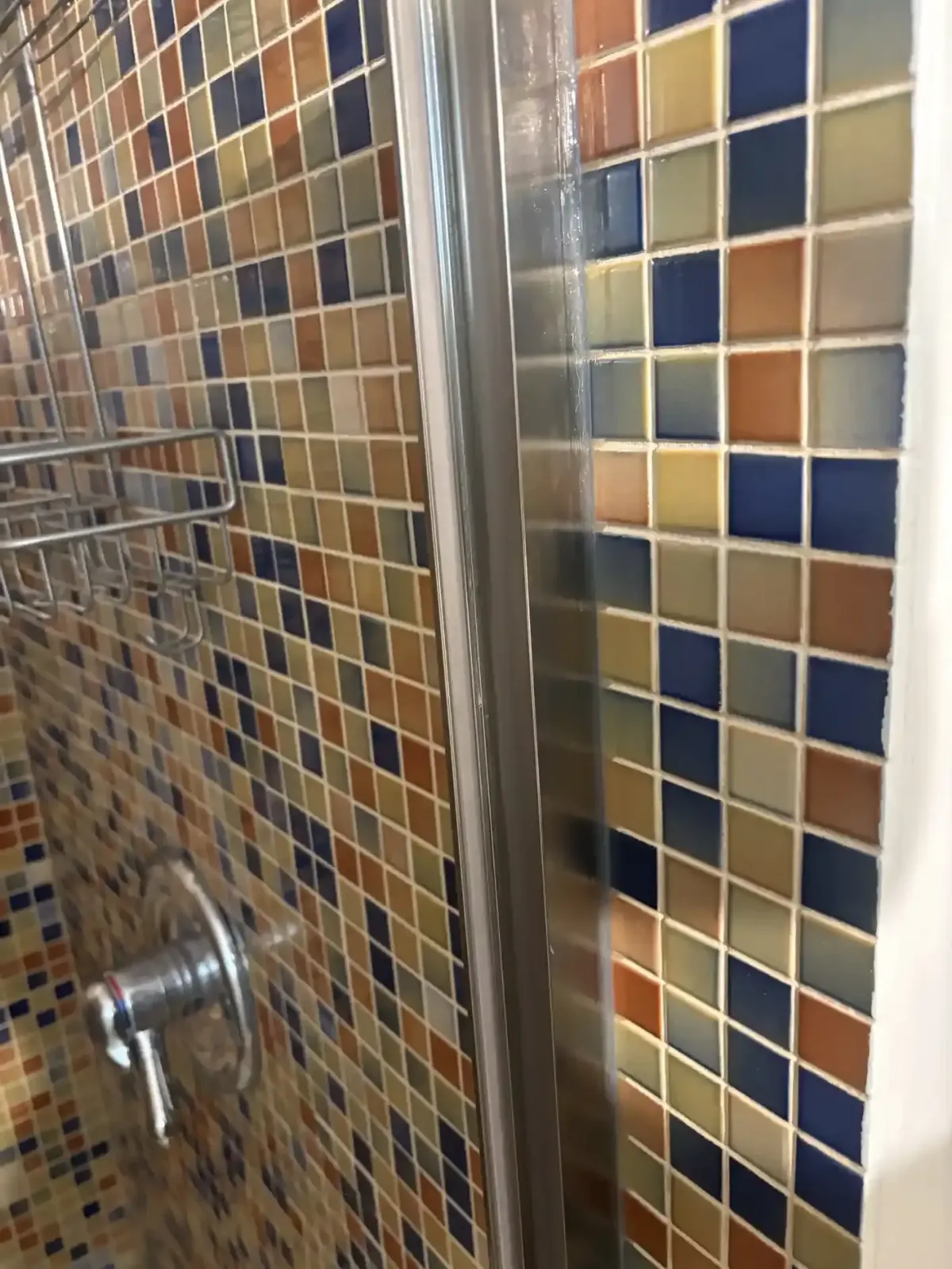
Denver Southern Hills Natural Stone Tile Move-Out Cleaning — Spot Report
Natural Stone Tile Cleaning in Denver's Southern Hills: Mineral Haze, pH Rules, and a Landlord Ready to List
Natural stone tile in a 1950s Denver home had built up the white mineral haze that Denver Basin hard water deposits on every porous surface over time. Acid chemistry was not an option — it never is on stone. pH-neutral mineral-targeting chemistry and truckmount extraction brought the stone back, and the landlord listed the property ready to show.
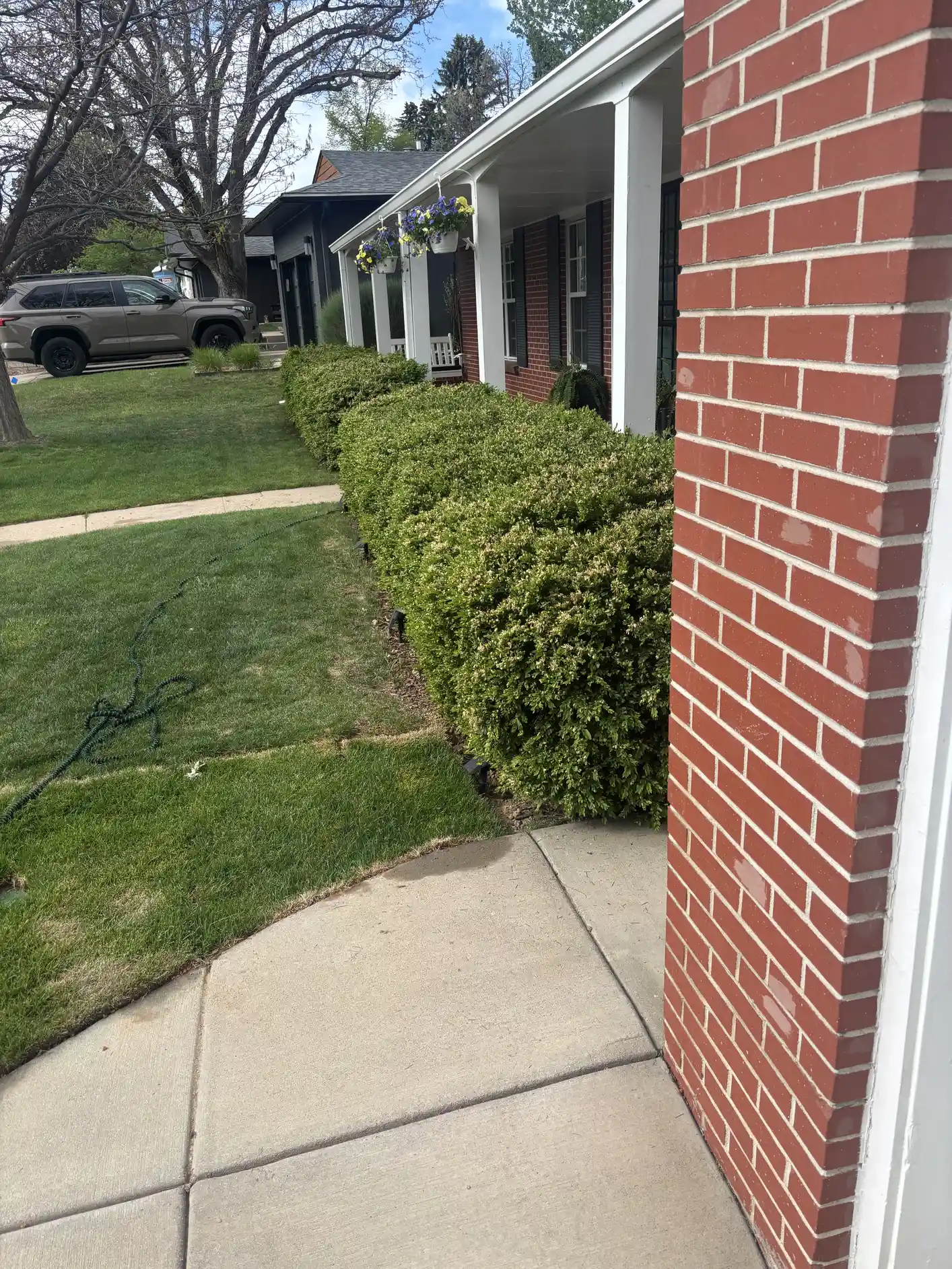
Southern Hills, Denver — The Property and the Stone
Southern Hills is one of southwest Denver's established residential neighborhoods. Homes here were built primarily in the 1950s and 1960s — quality construction that has held its value. The property we cleaned this week was a landlord prep: move-out before listing for sale.
The tenants had lived there for years. Natural stone tile throughout the home had accumulated the white mineral haze that Denver water leaves on porous surfaces over time. It had dulled the stone significantly — the color and depth that makes natural stone a premium material were obscured under mineral deposit.
Natural stone — travertine, marble, limestone, slate — has an inherently porous surface structure. That porosity gives it visual depth and texture. It also makes it a collector of whatever minerals the local water supply carries. In Denver, that supply comes from the Denver Basin aquifer. For homeowners considering professional tile and grout cleaning in Denver, understanding what's actually in the water is the starting point.
The Science — Why Denver Basin Hard Water Hazes Natural Stone
Denver Basin hard water and tile interact in a specific and predictable way. Denver Basin aquifer water is rated hard to very hard. It carries dissolved calcium carbonate (calcite) and magnesium at elevated concentrations. When this water contacts a porous surface — natural stone, cement grout, unsealed tile — and evaporates, it leaves those dissolved minerals behind in crystalline form. The calcium carbonate crystallizes in the stone's surface pores and on the grout. Over months and years, the deposits layer and compound.
The result is what the industry calls scale or mineral haze — a white to grey film that sits in and on the stone surface, blocking the natural color underneath.
This is a fundamentally different problem from organic soil or grease. Organic soil breaks down with alkaline or enzyme chemistry. Mineral scale is an inorganic crystalline deposit — calcium carbonate bonded physically to the stone surface. Breaking that bond requires a chelating agent: a compound that forms a stable complex with the calcium ion, pulling it away from the surface and into solution so it can be rinsed out.
Here is the constraint that governs every decision on natural stone: acid chemistry is permanently off the table.
Travertine, marble, and limestone are calcium carbonate themselves — the same mineral compound that comprises the scale deposit. Acid reacts with calcium carbonate through a simple acid-base neutralization. The result on scale is dissolution of the mineral deposit. The result on the stone itself is exactly the same reaction — the acid etches into the stone surface, dissolving the calcium carbonate matrix and permanently altering the stone's texture and finish. That etch cannot be cleaned. It requires mechanical refinishing or replacement.
This means the chelating chemistry used on natural stone must operate at pH 6-8 — neutral. Neutral-pH chelating agents selectively complex with the free calcium ions in the mineral deposit through a ligand exchange mechanism, without triggering the acid-base reaction that damages the stone.
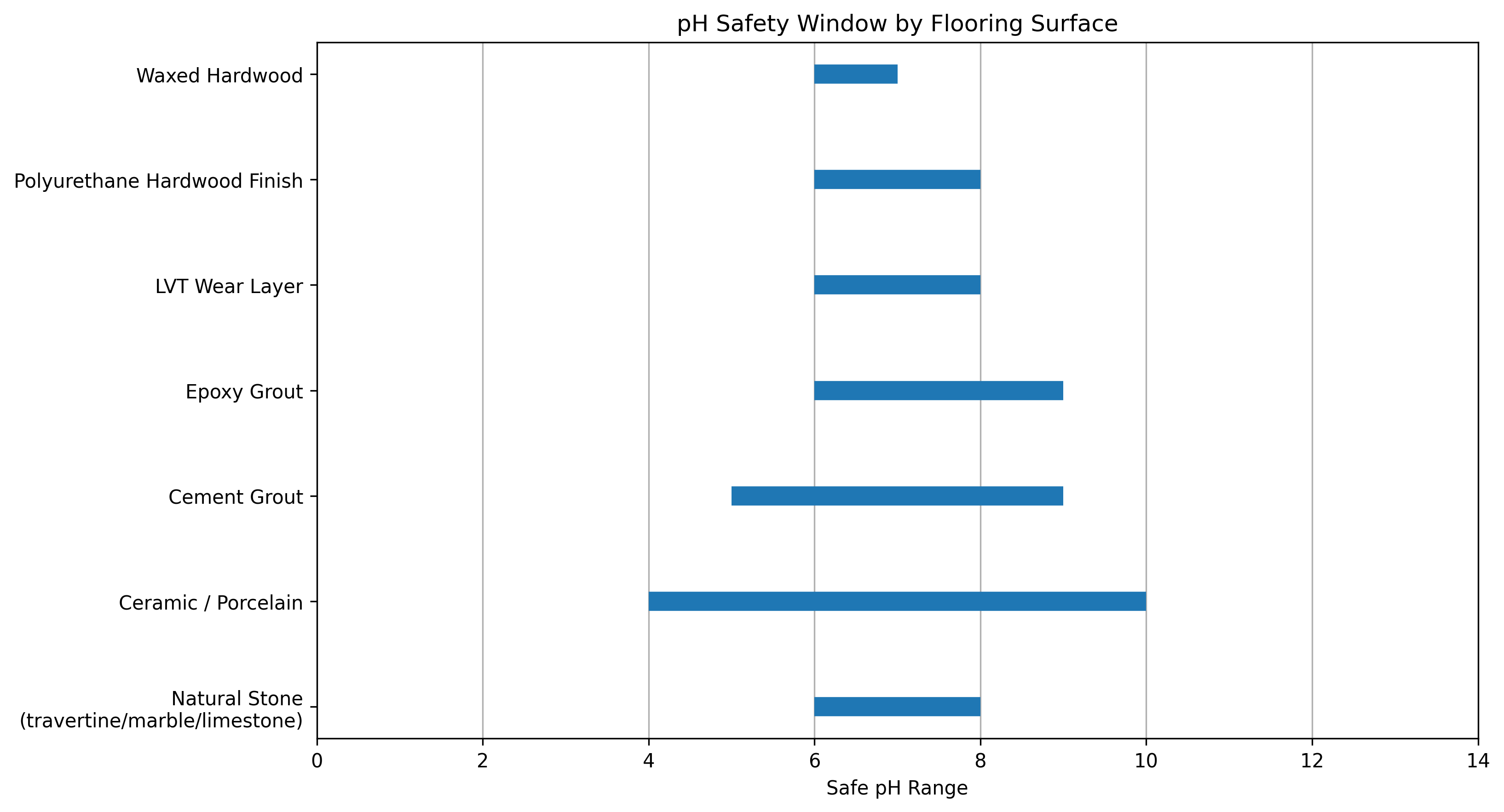
pH Safety Window by Flooring Surface
Custom HTML/CSS/JAVASCRIPT
The Cleaning Process — This Job, Step by Step
Natural stone tile cleaning starts with a surface read before any chemistry touches the floor. We confirmed stone type, assessed grout type (cement vs. epoxy — different chemistry tolerances), and mapped the haze pattern across the field. The haze was heaviest in the areas with the most water contact — consistent with evaporation-driven mineral deposit.
Process:
pH-neutral chelating pre-treatment applied to tile field and grout lines
Dwell time observed — the chelating agents need contact time to complex with calcium ions and pull the crystalline deposit into solution
Prochem Apex GTX truckmount at calibrated pressure for natural stone — lower PSI than we run on ceramic or porcelain, because the stone surface integrity has to be protected under extraction pressure
Detail pass on grout lines where mineral deposit was most concentrated in the pore structure
Full surface rinse — removes the chelated mineral solution before it can re-deposit
Moisture check on completion
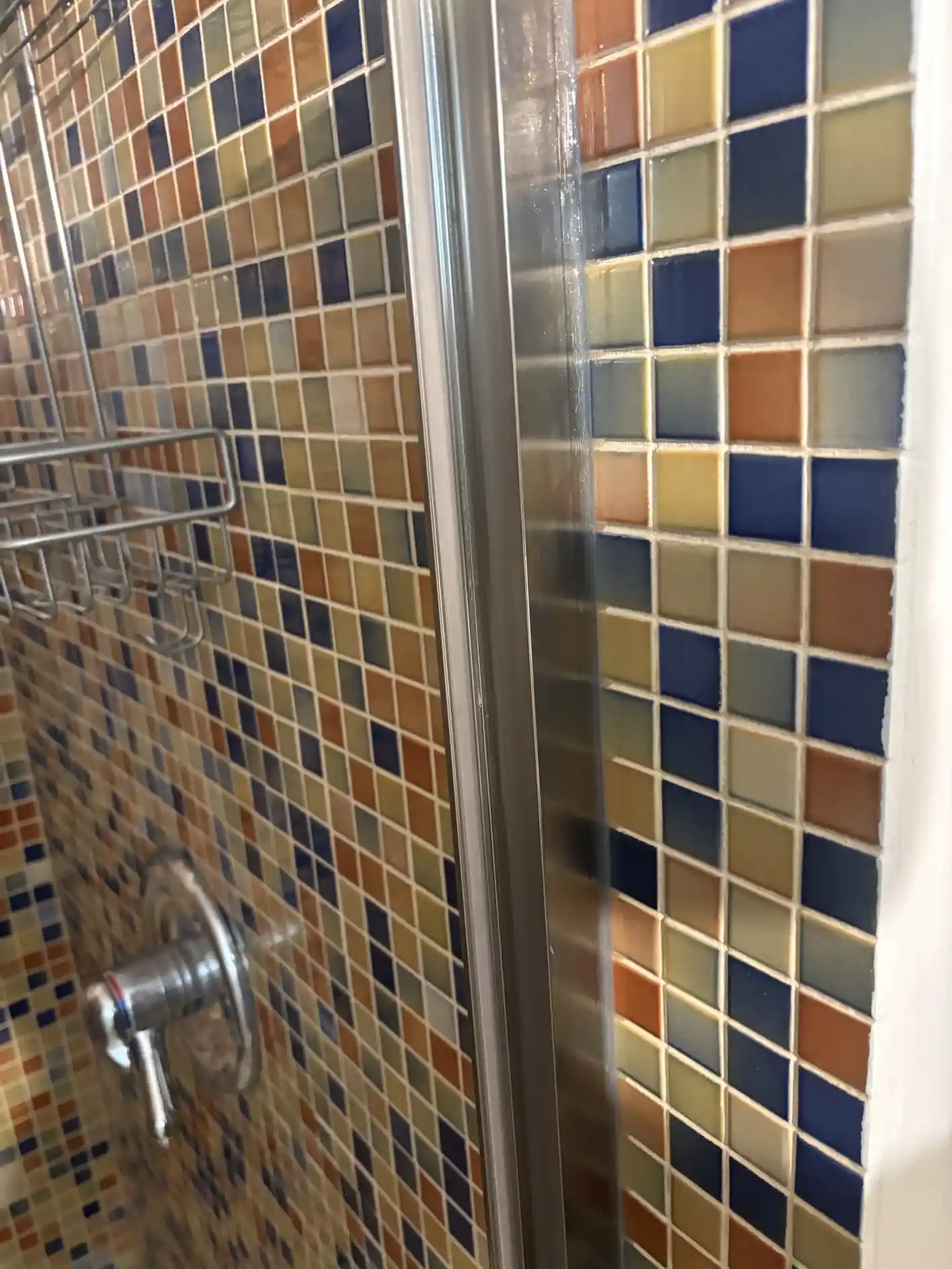
The stone came back fully. The white mineral haze that had layered over years of Denver Basin water contact cleared, and the natural color and depth of the stone returned. The grout lines went from grey-white mineral buildup to their actual color. The landlord said it looked better than she remembered it looking when it was new.
FAQ — Natural Stone Tile Cleaning in Denver
Why can't acid cleaners be used on natural stone tile?
Travertine, marble, and limestone are composed of calcium carbonate — the same mineral that forms the scale deposit on their surface. Acid dissolves calcium carbonate through an acid-base reaction. On scale, this removes the deposit. On the stone itself, the identical reaction etches the surface — dissolving the stone matrix and permanently altering the finish and texture. This is not reversible through cleaning. The only repair is mechanical refinishing or replacement. pH-neutral chemistry (pH 6-8) is the only safe option for natural stone, and it's what we use on every stone surface without exception.
What causes the white haze on tile and grout in Denver homes?
Denver Basin aquifer water carries dissolved calcium carbonate and magnesium at hard to very hard concentrations. When this water evaporates on a porous surface — stone, unsealed grout, or tile — the dissolved minerals crystallize in place and remain on the surface. Each evaporation cycle deposits another layer. Over months and years this compounds into the visible white or grey haze. It is not surface dirt — it is a mineral crystal deposit, and it requires chelating chemistry to remove correctly.
How often does natural stone tile in a Denver home need professional cleaning?
In Denver's hard water environment, annual professional cleaning is a sound maintenance interval for most natural stone tile. Areas with higher water contact — bathrooms, kitchen areas near sinks, entryways — may benefit from cleaning every 9-12 months. A penetrating grout sealer applied after cleaning fills the pore structure of the grout and slows future mineral accumulation significantly by reducing the surface area available for crystal formation.
We cleaned the basement Berber carpet cleaning Denver on this same job — the full property was prepared in one visit before the landlord listed.
How We Know Denver
Denver's housing stock spans more than a century of construction, and Southern Hills represents one of its strongest mid-century eras. Homes from the 1950s and 1960s in this part of the city were built with quality materials — including natural stone tile that, with correct chemistry and maintenance, outlasts any substitute flooring option.
Denver Basin aquifer water affects every surface in our service area. On natural stone, the effect is mineral haze. On carpet, it contributes to gritty texture and faster re-soiling. On grout, it builds compounding white deposit in the pore structure. Understanding the water chemistry before we start is part of reading every job correctly.
Southern Hills was a reminder of what natural stone looks like when it's clean — and how far mineral haze can obscure that. The landlord listed the property the same week. If you need carpet and tile cleaning in Denver , we can be on-site, read the surface, and bring it back.
Call Colorado Choice Carpet Cleaning: (720) 730-8055.
