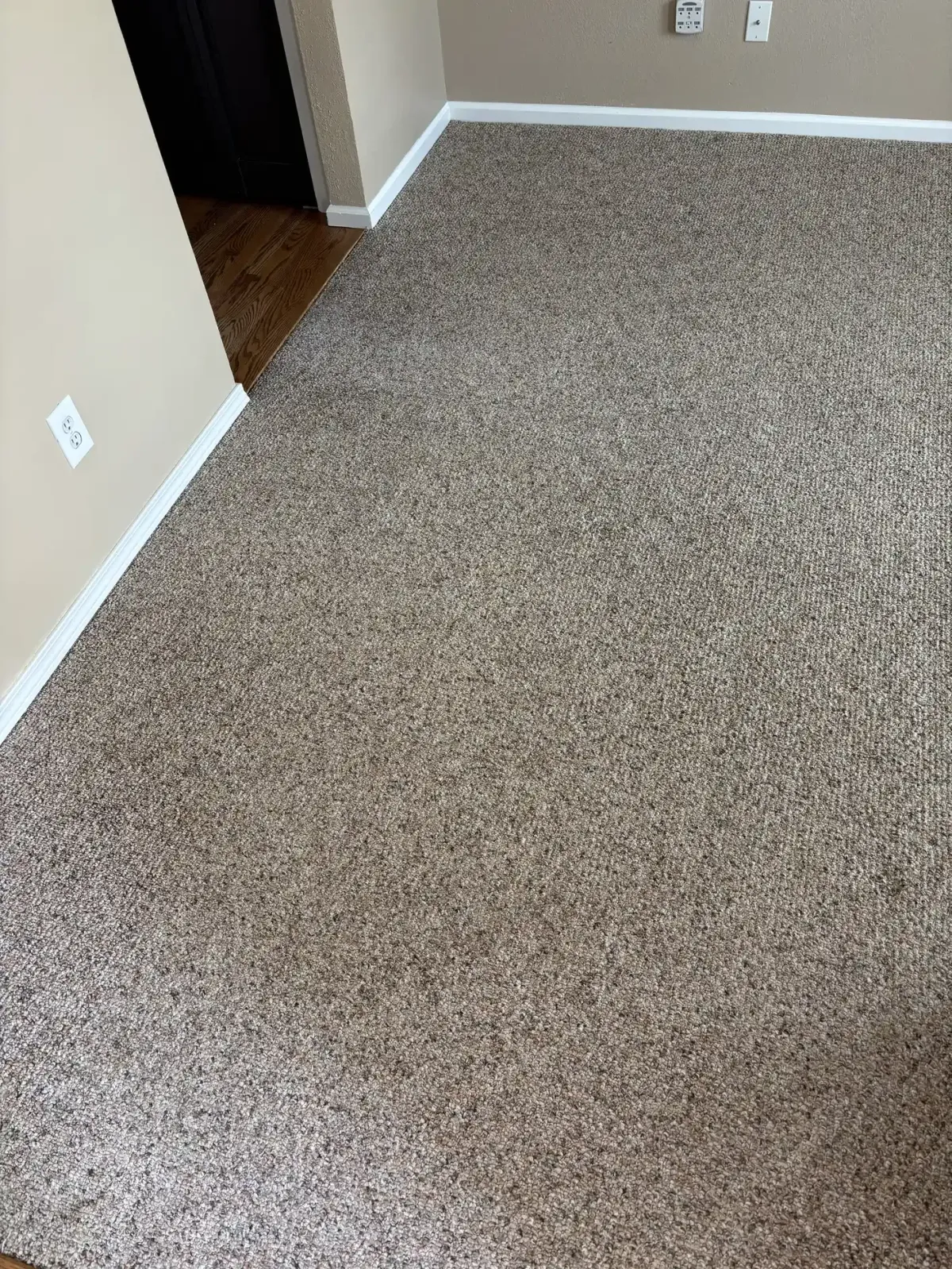
Denver Upholstery Cleaning – Hampton Microfiber Referral
When a Portable Couldn't Make the Stairs — Denver Upholstery Cleaning on the Second Floor
The Job That Came to Us Because Nobody Else Could Get There
This one started with a phone call from another cleaning company.
That happens more than people might expect. Cleaners in our industry — portables, small-truck operators, solo owner-operators — they know who we are. When they run into a job they can't finish, or a job they shouldn't have taken in the first place, they call us. That's not a knock on them. It's just how the referral network in Denver works when people respect the trade enough to admit what their equipment can or can't do.
This job was a second-floor apartment just off Hampton Avenue in Denver — a stretch of the city where older mid-rise and high-rise apartment buildings run from one end to the other. If you've driven Tamarack and Hampton, you know exactly what we're talking about. These are buildings from the 1960s and 1970s, anywhere from one story to fifteen floors, housing thousands of residents. We've cleaned as high as the twelfth and thirteenth floor in that part of Denver. Second floor sounds easy until you do the math on hose length.
The Hose Problem That Turns a Simple Job Into a Logistics Puzzle
Our truck-mounted system — a Prochem Apex GTX — runs 200 to 230 degrees Fahrenheit at the wand. That heat and extraction power is what separates us from a portable machine. But truckmount equipment has a physical limitation: the hose runs from the truck, parked on the street or in a lot, all the way to wherever the cleaning is happening. The further you get from the truck, the more pressure drop, heat loss, and friction you're fighting.
On this job, our truck could not get within 300 feet of the entrance. The building, the parking lot layout, the access points — none of it allowed us to get close. So we ran hose from the street, through the exterior, down the hallway, and up to the second floor. By the time we were at the couch, we were over 400 feet from the machine.
That's a real run. And it's exactly the kind of run a portable operator can't make — not because they lack the skill, but because their machine was never built to replace a truckmount at that scale. The portable couldn't get the equipment up the stairs. We could, because the equipment stays in the truck. The only thing we carry up is the hose and the wand.
What We Were Cleaning — and Why It Mattered
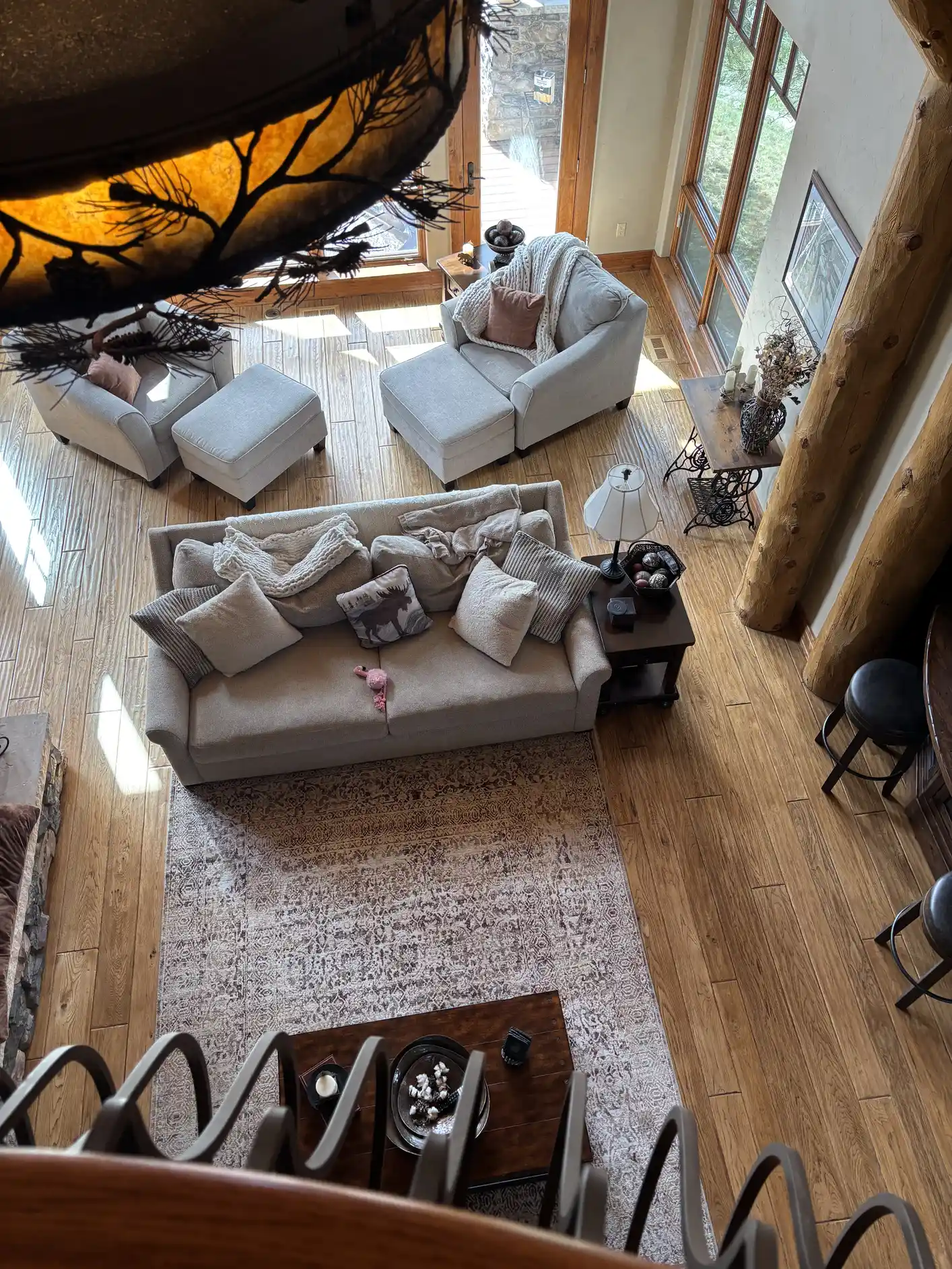
The couch was a microfiber sectional. The resident had a dog, and the dog had been on the furniture for a while. Not a neglect situation — just a lived-in couch that had taken on pet hair, body oils, and general use soil over time. Microfiber is a fabric that looks clean longer than it is. The fibers are so fine that soil embeds below the surface you can see. By the time microfiber looks dirty, it's already well past what a surface wipe or a consumer spray can address.
We followed standard W-code protocol — water-based pre-spray, low-moisture extraction, controlled dry time. Microfiber requires attention to water application because it's prone to water rings if too much moisture sits on the surface without full extraction. Our moisture control at the wand matters here. The result was a couch that looked and smelled like it had before the dog claimed it.
Why Other Carpet Cleaners Refer to Us
We're not going to pretend that every referral we get is from a competitor who had no other option. Some of it is. But more often, it's from people in our industry who've crossed paths with us, heard about us through the local chamber or trade network, or seen our reviews and decided that when something is outside what they do well, we're the safer call for their customer.
That trust matters. A portable operator who refers a job to us knows that customer is going to get taken care of. They're not sending them to a gamble — they're sending them to a company with 23 years in Denver, IICRC certification in upholstery (UFT-certified), and equipment that can physically reach where they can't.
We get referrals from customers, from other cleaners, and occasionally from property managers who've seen us in their buildings before. Denver's older apartment corridors — Hampton, Tamarack, the mid-rise stock built in the 70s — are exactly where that kind of professional network shows up in practice.
What Makes Upholstery Cleaning Different From Carpet Cleaning
Not every carpet cleaner does upholstery. That's worth saying directly.
Upholstery cleaning requires IICRC UFT certification — Upholstery and Fabric Technician — and a working knowledge of fabric codes, fiber types, and moisture behavior. A company that cleans carpet well and a company that cleans upholstery well are not automatically the same thing. The risks are different. You can damage a couch faster than you can damage carpet if you apply the wrong chemistry, too much heat, or too much moisture for the fiber type.
Microfiber — W-code — is forgiving compared to natural fibers. But it still demands controlled extraction and the right pre-treatment. A truckmount gives us the extraction power to pull moisture back out efficiently. A portable in a second-floor hallway, if it could even get there, wouldn't have the same draw. Our full upholstery cleaning service covers W, S, W/S, and X-code fabrics across the Denver Metro.
The Hampton and Tamarack Corridor — What We Know About This Part of Denver
Denver's southwest apartment corridor along Hampton and Tamarack includes some of the highest unit density in the metro. These buildings were constructed over several decades — 1960s through the 1980s primarily — and range from garden-style two-story complexes to full high-rise towers. We've run hose to the twelfth and thirteenth floor in this area.
The older construction means older carpeting in some units, heavily used common hallways, and access layouts that were never designed with a cleaning truck in mind. Parking is often street-side, loading zones are minimal, and the distance from truck to apartment can be significant on any given job. Knowing that before you show up is the difference between completing the job and leaving.
For upholstery specifically, second and third-floor apartment jobs in this corridor are not unusual for us. When you have the hose length and the truckmount extraction to back it up, the floor number becomes a logistics question, not a deal-breaker. Property managers in this part of Denver who need recurring Denver carpet cleaning or upholstery work know us by name.
Frequently Asked Questions About Upholstery Cleaning in Denver Apartments
Can a truckmount system clean upholstery in a high-rise apartment in Denver?
Yes — and it's often the only way to do the job properly. Truckmount systems stay in the vehicle. What goes into the building is the hose and the cleaning wand. Our setup runs hose well past 400 feet when the job requires it. We've worked buildings as high as the twelfth and thirteenth floor in Denver's Hampton and Tamarack corridor. The distance from truck to couch affects heat and pressure, and experienced operators know how to compensate for long runs.
Why do portable carpet cleaners refer upholstery jobs to other companies?
Portable machines have limits. They're designed for smaller, more contained jobs — typically on a single floor with easy equipment access. When a job requires climbing stairs with equipment, running significant hose distance, or handling a couch that needs the extraction power of a truckmount, a portable operator may refer out. It's a professional decision, not a failure. The best operators in our industry know their equipment's limits and protect their customers by connecting them with someone who can finish the job correctly.
What is the right way to clean a microfiber couch with pet hair and odor?
Microfiber is typically W-code fabric — safe for water-based cleaning. The right process starts with a thorough dry vacuuming to remove loose pet hair and surface debris, followed by a water-based pre-spray appropriate for the soil type. For pet odor, an enzyme pre-treatment targets the uric acid compounds embedded in the foam and fabric. Low-moisture extraction pulls moisture back before water rings can form on the surface. Proper dry time — aided by air movement — completes the process. Attempting this with a consumer machine or spray-and-wipe method will rarely reach the soil embedded below microfiber's fine fiber surface.
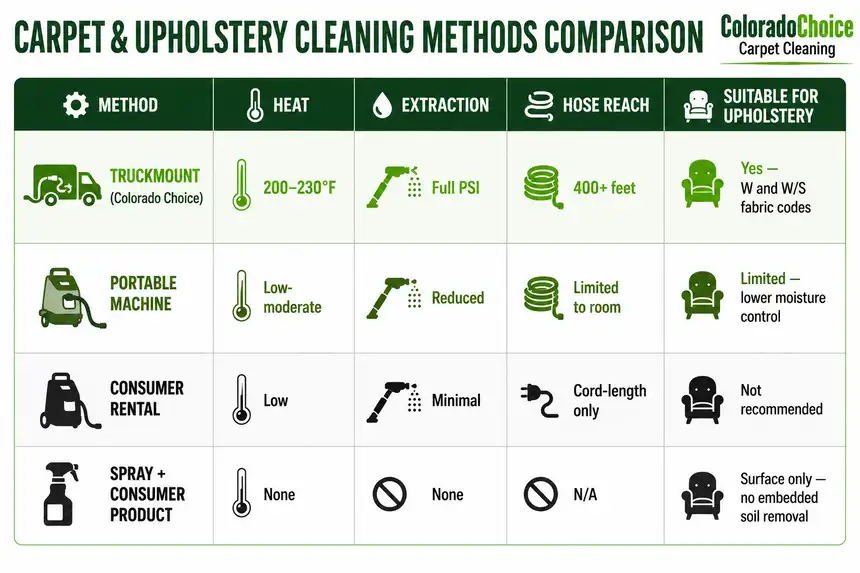
Source: IICRC S300 Upholstery Cleaning Standard — professional truckmount systems deliver consistently higher extraction rates than portable units on upholstered furniture.
