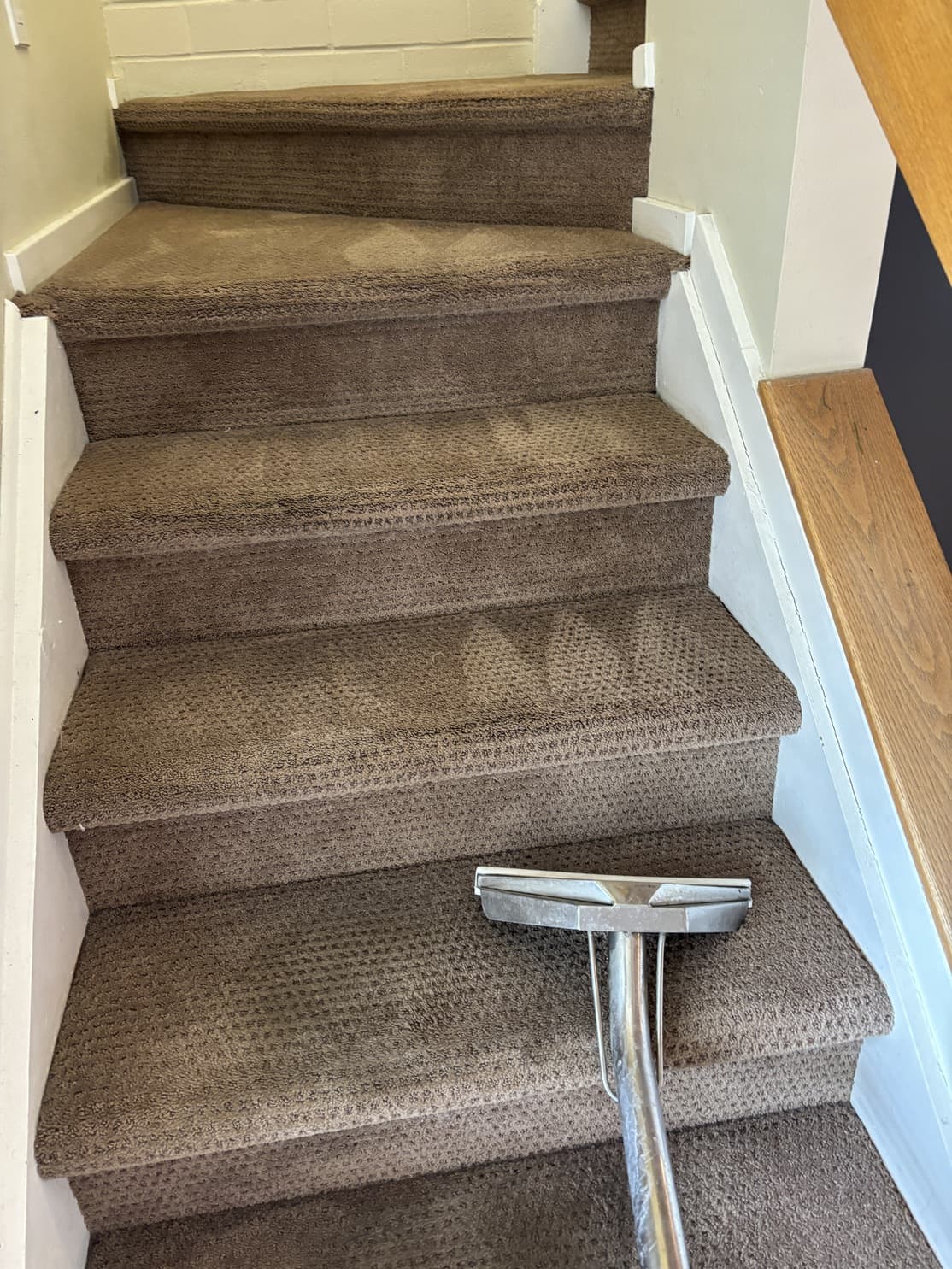
Why Diana's Stairs Restained Two Days Later — A Highlands Ranch Wicking Case Study
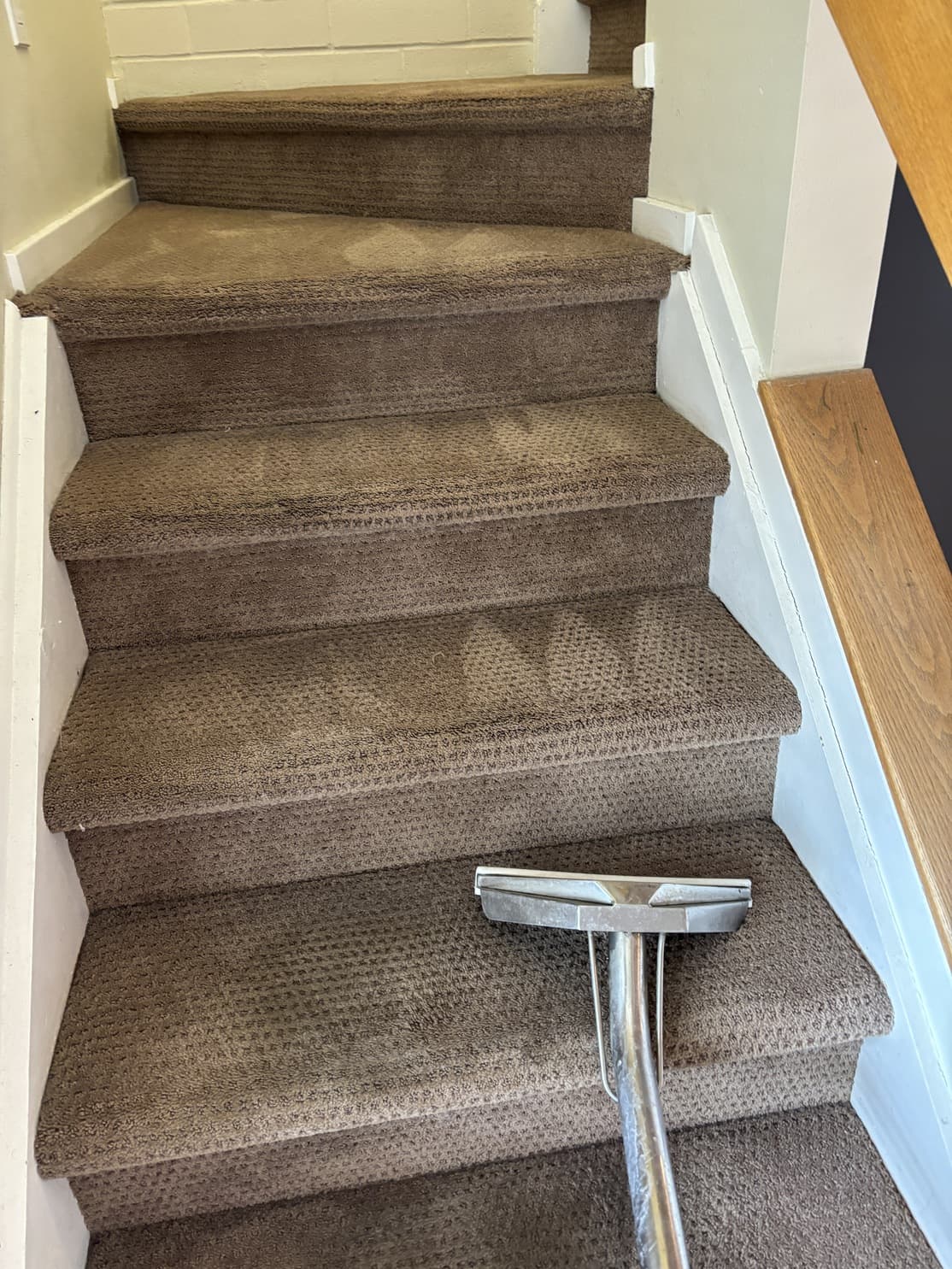
Two days after we cleaned Diana's staircase in Highlands Ranch, a stain came back through the carpet fiber. She called us, worried the cleaning hadn't worked. It had — this was wicking, a known reaction that happens in a small percentage of jobs, and we came back and fixed it the same day, at no charge.
What Wicking Actually Is
Wicking happens when soil or staining trapped deep in the carpet backing or padding gets pulled back up to the surface as the carpet dries, following the moisture on its way out. It can look exactly like the original stain reappearing — but it isn't a sign the first cleaning failed. It's a known, documented reaction in the carpet cleaning industry, and it shows up in roughly 2-5% of jobs where staining has worked its way deep into the pad.
Diagnosing Diana's Stairs
When Diana called, we didn't assume anything — we went back out and inspected the stairs in person. The pattern was consistent with classic wicking: the stain had reappeared in the exact same location, with a lighter, more diffused edge than a fresh stain would show. That's the signature of contamination traveling upward through the pile as the carpet dried, not new staining.
How We Fixed It — Same Visit, No Charge
- Re-inspected the affected stair treads to confirm the wicking pattern
- Applied a deeper extraction pass targeting the pad-level contamination directly, not just the surface fiber
- Used a slower-drying technique on the affected treads to prevent the same contamination from wicking back up a second time
- Confirmed the stairs were fully clear before leaving
Because this was a direct result of our own cleaning, there was no charge for the return visit. That's the standard we hold ourselves to — if it's wicking from our work, we come back and finish the job right.
Why This Doesn't Happen More Often
Most jobs never wick, because most staining sits closer to the surface of the fiber. Wicking shows up specifically when contamination has already worked its way deep into the backing or pad before the cleaning even happens — which is more common on older, heavily soiled carpet or stairs with years of accumulated traffic. Knowing the signs of wicking versus a genuinely failed cleaning is part of what proper IICRC training covers, and it's why we treat a callback like Diana's as a diagnosis first, not just a re-clean.
How We Know Highlands Ranch
Highlands Ranch's mix of older and newer homes means we see a wide range of carpet ages and soil levels across communities like BackCountry, Eastridge, Northridge, and Westridge. See our full Highlands Ranch carpet cleaning services for how we handle the full range of what this area's carpet actually needs.
FAQ — Wicking and Carpet Cleaning in Highlands Ranch
Is wicking a sign the original cleaning failed?
No — wicking is a known reaction where trapped soil rises back to the surface as carpet dries. It happens in roughly 2-5% of jobs and isn't a sign of a botched cleaning.
Will you fix wicking for free if it happens after your cleaning?
Yes. If wicking shows up as a result of our own cleaning, we come back and correct it at no charge.
How do you tell wicking apart from a new stain?
Wicking typically reappears in the exact same spot as the original stain, with a lighter, more diffused edge — a pattern consistent with contamination traveling upward through the pile as the carpet dries, rather than fresh staining.
Ready to book? Call (720) 730-8055 or visit coloradochoicecarpet.com.
