Highlands Ranch Carpet Cleaning — Elderly Dog Urine, Red Hue Stains, and Nylon Cut Berber on University Boulevard
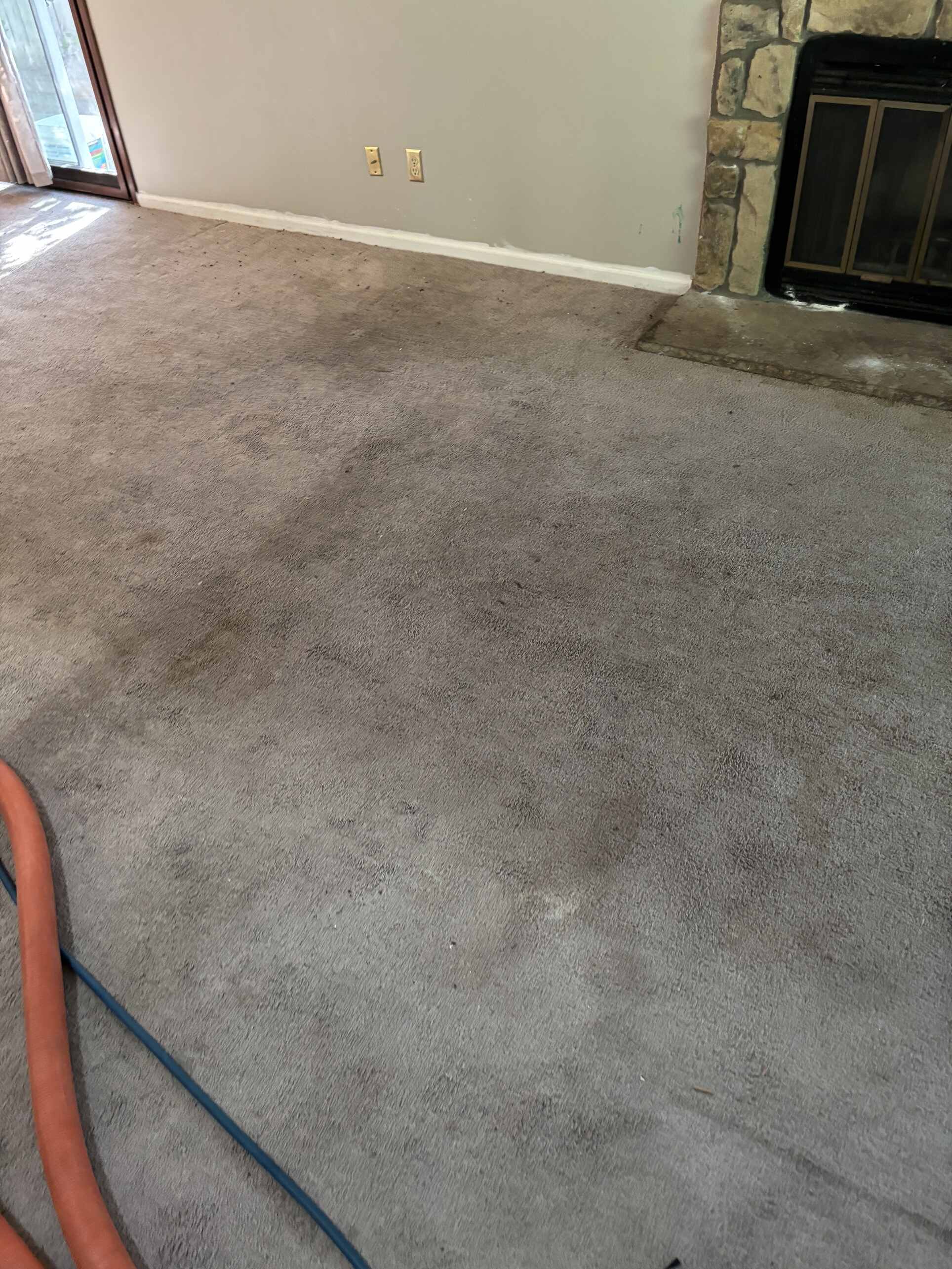
She was moving out of Highlands Ranch. The carpet in three rooms plus the stairs had taken years of wear from an elderly dog — 15 years old, barely able to get outside anymore. The damage was layered: urine saturation, embedded soil, and something that stops even experienced technicians cold — a red hue left behind after everything else cleans out.
The carpet was nylon cut Berber. That fiber type matters more than most customers realize when it comes to why that red cast stays.
We treated it heavy, extracted deep, and the carpet came back significantly. The customer was happy. But that faint red cast in a few zones stayed, and there is a reason for that rooted in nylon fiber chemistry — one that every pet owner with an older dog deserves to understand before they clean.
Three rooms, stairs, and full pet treatment. Internet special price:$249.
What Causes the Red Hue in Dog Urine Stains — The Science
This is one of the most misunderstood outcomes in carpet cleaning. A customer sees a stain lift, the carpet brightens, the odor goes — and then there is still a faint reddish-pink cast in the fiber. It looks like the stain is still there. In most cases it is not.
Here is what is actually happening.
Dog urine contains urochrome — the pigment compound that gives urine its yellow color. As urine ages in carpet fiber, it oxidizes. That oxidation process shifts the pigment chemistry from yellow toward a reddish or pinkish tone, especially in lighter colored carpet. The older the dog and the longer the deposit has been in the fiber, the more advanced the oxidation.
On a 15-year-old dog who can no longer reliably get outside, deposits have been sitting in fiber for a long time. The uric acid and urochrome compounds have bonded at a molecular level with the carpet fiber itself — not sitting on top of it, bonded to it.
Hot water extraction removes the uric acid crystals, the bacteria, and the odor-causing compounds effectively. What sometimes remains is the oxidized pigment that has chemically altered the dye sites in the carpet fiber. That is not a cleaning failure. That is fiber chemistry.
Why Nylon Makes the Red Hue Harder to Remove
Not all carpet fiber holds urochrome pigment the same way. Nylon is the most important fiber type to understand here — and it is the reason this job had a more persistent red cast than the same contamination level would produce in polyester or olefin carpet.
Nylon carpet fiber is manufactured with acid dye sites built into its molecular structure. These dye sites are what allow nylon to hold color so well and why nylon carpet is prized for its durability and appearance retention. That same characteristic becomes a liability on aged pet urine jobs.
When oxidized urochrome contacts nylon's acid dye sites under heat — including the heat of hot water extraction — the pigment can bond directly to those dye sites. The bond is chemically stable. It does not respond to standard enzyme chemistry because enzyme chemistry targets uric acid and biological compounds, not oxidized pigment. Reducing agent treatments can partially neutralize urochrome discoloration on nylon in some cases, but on advanced oxidation from years of repeated deposits, the bond is often permanent.
Polyester and olefin carpet do not have the same acid dye site structure. Urochrome oxidation still occurs in those fiber types, but the pigment bonding mechanism is weaker and the red hue is generally easier to reduce. On nylon — especially nylon cut Berber with its larger surface area per square inch — the combination of acid dye site chemistry and open loop structure creates the most challenging scenario for red hue removal in the industry.
Why Cut Berber Is Still Our Favorite — And Its One Vulnerability
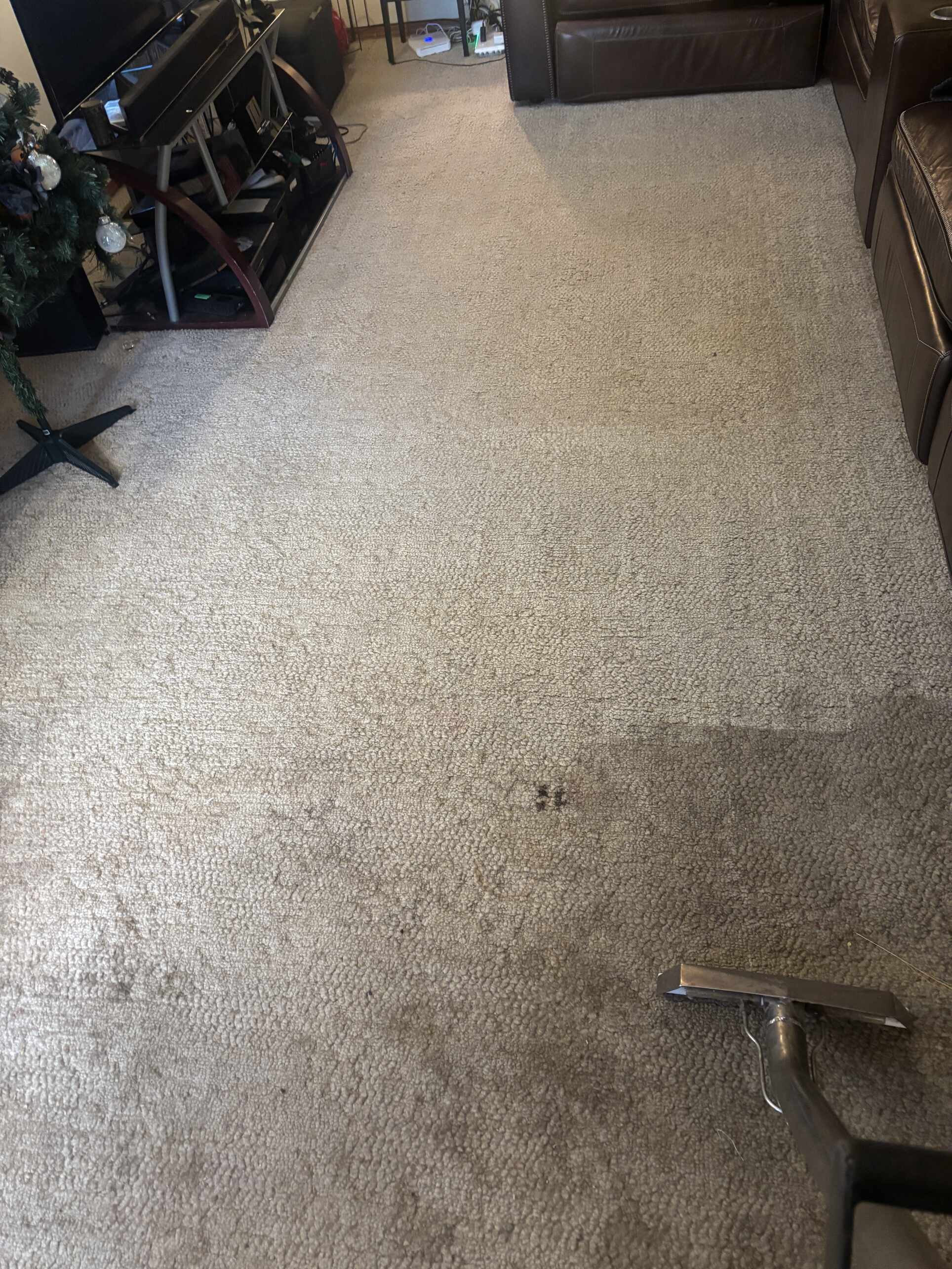
This job was nylon cut Berber — our favorite carpet type to work with for everyday cleaning. Cut Berber has an open loop structure that gives technicians better access to the fiber base than tightly looped commercial Berber. Pre-treatment chemistry penetrates more evenly, agitation reaches deeper, and extraction pulls more contamination out per pass.
The vulnerability on this job is the same open structure that makes cut Berber so cleanable. More surface area per square inch means more contact between the oxidized urochrome and the nylon acid dye sites. In zones where an elderly dog has deposited repeatedly over years, that exposure is extensive — and the red hue, when it appears on nylon cut Berber, is the most persistent version of this outcome we encounter.
We applied heavy enzyme pre-treatment, gave it appropriate dwell time, and ran full hot water extraction at 200-230 degrees with our Prochem Apex GTX truckmount. The result was a significant improvement the customer was satisfied with. A faint red cast remained in the most heavily affected zones — consistent with advanced urochrome bonding on nylon acid dye sites.
What We Did — Step by Step on This Highlands Ranch Move-Out
Pre-inspection with UV light— We mapped the full contamination zone across three rooms and the stairs. UV light reveals urine deposits that are invisible in normal light, including zones the customer was not aware of.
Fiber identification— Confirmed nylon cut Berber and adjusted our protocol accordingly. Nylon requires calibrated enzyme concentration — Denver Basin hard water mineral ions compete with enzyme activity and require a higher-concentration formula to compensate.
Heavy enzyme pre-treatment— Professional-concentration enzyme formula applied across all contamination zones with extended dwell time. Not a quick spray and go.
Hand agitation— Worked the pre-treatment through the cut Berber pile to ensure chemistry reached the fiber base, not just the surface.
Hot water extraction— Full truckmount extraction pass at 200-230 degrees. Pulled contamination, uric acid crystals, bacteria, and loosened pigment compounds out of the fiber.
Second pass on heavy zones— The stairs and primary deposit zones received a second extraction pass to maximize removal.
Final inspection— Confirmed odor neutralization and documented residual red hue zones for customer transparency before we left.
What "Treated Heavy" Actually Means on a Pet Job
When we say we treated heavy on a job like this, we mean three specific things.More chemistry— professional-concentration enzyme pre-spray at a higher dilution ratio than a standard pet treatment, calibrated for nylon fiber and Denver Basin hard water.More dwell time— we let the enzyme do its work before we extract, which is the step most discount cleaners skip entirely because it takes time.And more extraction— additional passes over the high-saturation zones to pull contamination from the fiber base and, where possible, the padding underneath.
Heavy treatment is not a product. It is a protocol. It is what separates a job that gets the odor out from one that suppresses it temporarily. This is the standard we apply to every pet stain and odor removaljob we run.
Frequently Asked Questions About Pet Stain Cleaning in Highlands Ranch
Why does nylon carpet hold the red hue from dog urine more than other carpet types?
Nylon carpet has acid dye sites built into its fiber structure — the same characteristic that makes nylon hold color so well in normal use. When oxidized urochrome from aged dog urine contacts those acid dye sites under heat, the pigment bonds directly to the fiber at a molecular level. Enzyme chemistry removes the uric acid and odor compounds but does not break the oxidized pigment bond. This is a fiber chemistry outcome, not a cleaning failure. Polyester and olefin carpet do not have the same acid dye site structure, which is why the red hue is generally more persistent on nylon.
Can you clean nylon carpet with heavy pet urine damage before a move-out in Highlands Ranch?
Yes. Colorado Choice handles same-day and scheduled move-out carpet cleaning across Highlands Ranch including heavy pet urine jobs on nylon carpet. We are transparent about zones where permanent fiber discoloration is present before we start — nylon acid dye site bonding on aged deposits is a known outcome and we explain it clearly so there are no surprises at move-out inspection.
What does cut Berber carpet cleaning cost in Highlands Ranch with pet treatment?
This three-room, stairs, and full pet treatment job was completed at our internet special price of $249. Cut Berber with pet treatment pricing depends on room count, contamination level, fiber type, and whether sub-surface extraction is needed for padding saturation. Call or text for a fast quote — (720) 730-8055.
How We Know Highlands Ranch
Colorado Choice has provided Highlands Ranch carpet cleaning for over 23 years — BackCountry, Eastridge, Northridge, Westridge, Firelight, Tallgrass. We know the HOA communities here, the nylon carpet that dominates the housing stock in this area, the South Platte and Denver Basin water hardness that requires enzyme calibration on every pet job, and the October-through-April heating season that reactivates uric acid crystals in carpet that seemed fine all summer. Move-out jobs are a significant part of what we do in Highlands Ranch and Douglas County. We know what property managers expect and we deliver it.
Ready to schedule? Call Colorado Choice at (720) 730-8055.Highlands Ranch pet stain and move-out carpet cleaning — same-day available when you call before noon.
